Turn Your Packaging Concept Into a Production-Ready Solution


| Format | Typical Application | What Buyers Should Evaluate |
| Folding Carton | Secondary retail pack | Weight, dimensions, print area, storage efficiency |
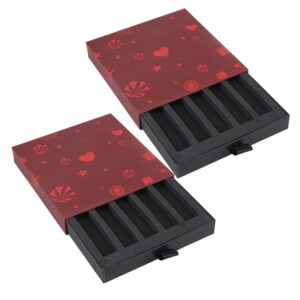
| Presentation Box | Higher-structure secondary pack | Protection, opening experience, internal layout |
| Pouch / Mylar Bag | Inner or primary package depending on specification | Sealing, barrier needs, resealability, required functionality |
| Box with Insert | Holds one or several components | Fit, movement control, compartment arrangement |
| Multi-Component Packaging | Box combined with pouch, tray or container | Interaction between every packaging layer |
Child-resistant performance requires particular care because it cannot be assumed from appearance. A paper carton surrounding another container does not automatically become child-resistant simply because it is difficult to open.
California, for example, requires cannabis goods to meet specific packaging requirements and states that edibles may require multiple-use child-resistant packaging depending on the configuration. The state also addresses tamper evidence, resealability and opacity for edible products. Department of Cannabis Control
The U.S. Consumer Product Safety Commission describes child-resistant packaging under the Poison Prevention Packaging Act as packaging designed to be significantly difficult for young children to open while remaining usable by adults. U.S. Consumer Product Safety Commission
Canada uses a separate federal cannabis packaging and labelling framework, including child-resistant container and mandatory labelling requirements. Health Canada also notes that it does not pre-approve individual packages or labels. Canada
Before approving cannabis edible packaging, buyers should therefore verify:
which packaging layer provides the required child-resistant function;
whether the package is single-use or needs to remain functional after reopening;
tamper-evident requirements;
resealability where applicable;
required warnings, symbols and THC/CBD information;
available label area;
restrictions affecting graphics or structural presentation;
documentation supporting any compliance claim.
Packaging regulations vary by jurisdiction, product format and packaging configuration. Treat regulatory review as part of specification development rather than as a final artwork check.


Packaging material should be chosen according to the function assigned to each component.
Paperboard and other paper-based constructions can provide structural support, surface area for printing and protection against normal handling. More substantial structures may be appropriate when the inner product or container needs greater crush resistance.
But freshness is a separate question.
If moisture, oxygen, aroma or other environmental barriers matter to the edible product, identify which inner packaging component provides that protection. An outer paper package should not automatically be described as a food-contact or high-barrier material.
Evaluate:
product weight and fragility;
inner container or pouch material;
crush and movement protection;
storage environment;
shelf-life requirements;
distribution conditions;
packing process;
desired product presentation;
sustainability objectives.
If biodegradable packaging or another sustainability claim is being considered, buyers should also confirm exactly which material the claim applies to and what supporting documentation is available.
The result should be a durable packaging system based on defined functions rather than broad material claims.


A packaging supplier should be evaluated as part of the production system, not just as a source of printed cartons.
Procurement and packaging teams should first determine whether the supplier understands structural development, material selection, print production and quality control for the packaging being ordered.
Ask potential packaging companies about:
For regulated packaging, ask a more specific question: Which component is responsible for the claimed regulatory function, and what documentation supports it?
If design support is offered, clarify whether it means artwork preparation, dieline adjustment, structural development or complete packaging engineering. These are different services.
Likewise, terms such as high-quality packaging, reliable packaging or fast turnaround are commercial claims rather than technical specifications. Buyers should verify what measurable process or commitment sits behind them before making a sourcing decision.