Meta Description: Discover 8 benefits of custom CBD packaging, from stronger brand recognition and product protection to clearer labeling, safer design, and better retail positioning.
Excerpt: Custom CBD packaging does more than make a product look premium. Done properly, it can improve label clarity, protect the product, separate competing SKUs, support safer handling, strengthen buyer confidence, and make a CBD brand easier to sell online and at retail.
Top 8 Benefits of Custom CBD Packaging for Your Business
Put eight or ten CBD products on a conference table.
Don’t read anything yet.
Just look.
Green.
Black.
Kraft brown.
Gold foil.
Little leaf.
Another leaf.
Maybe a water droplet for variety.
You can almost predict the next carton before somebody puts it down.
That sameness is mildly funny until you remember what those boxes are actually expected to do: identify a formulation, communicate CBD quantity, hold net-content information, accommodate ingredients and directions, leave room for warnings or market-specific copy, carry variable lot data, scan properly at retail, protect a bottle, and somehow still look convincing in an Amazon-sized thumbnail.
Quite a job.
For paperboard.
And CBD isn’t an ordinary consumer category where you can develop a pretty front panel first and sort out the awkward copy later, because formulation terminology, claims, product format, distribution channel, state requirements, federal restrictions, and the basic question of what you’re legally communicating can all crash into the same six panels.
Things get messy.
In January 2023, the FDA said its existing conventional-food and dietary-supplement frameworks weren’t appropriate for CBD and argued that a new regulatory pathway could address issues such as clearer labeling, contaminant controls, CBD-content limits, minimum purchase ages, and safeguards against accidental ingestion by children.
Which is why I frankly believe the old “premium box = premium brand” pitch is too shallow for this category.
Way too shallow.
Custom CBD packaging is packaging developed around a particular CBD product, container, brand system, selling channel, information hierarchy, and protection requirement instead of forcing that product into a generic stock package.
That’s the clean definition.
Real packaging gets dirtier.
Why CBD Packaging Has More Work to Do Than a Pretty Carton
Here’s the ugly truth.
A beautiful package can still be wrapped around bad information.
A 2024 peer-reviewed study examined 202 commercially available U.S. CBD products—100 tinctures, 48 gummies, 34 vape products, and 20 topicals—and reported that 74% differed from their labeled CBD potency by at least 10%.
Another uncomfortable number: 26% of products sold as full-spectrum, broad-spectrum, or isolate didn’t meet the claimed product type.
One tested product contained 565% of its labeled CBD amount.
A carton won’t repair sloppy formulation. It won’t fix a questionable COA, poor process control, careless extraction, or bad laboratory work, and wrapping the whole mess in soft-touch film with a gold-blocked logo doesn’t magically make the numbers more accurate.
Obviously.
But the packaging does control what the customer sees.
It controls what the retailer sees.
It controls what the picker in a warehouse sees at 7:15 on a Monday morning while trying to separate a 500 mg SKU from a nearly identical 1,000 mg SKU.
Different problem.
Still expensive when you get it wrong.
That’s why the serious packaging conversation eventually moves away from “matte or gloss?” and into less photogenic territory: artwork versioning, copy zones, barcode quiet zones, bottle tolerances, insert lockup, cutter guides, QR readability, lot coding, bleed, trapping, grain direction, coating sequence, pack-out speed.
Nobody puts that on Pinterest.
They should.
1. Custom CBD Packaging Gives the Information Somewhere to Live
Try this sometime.
Take a stock carton.
Now add:
Product name.
CBD strength.
Net contents.
Product format.
Ingredients.
Directions.
Brand mark.
Manufacturer information.
Barcode.
QR code.
Lot area.
Warnings where applicable.
Then somebody from marketing walks over and says, “Could we make the logo about 20% bigger?”
Of course they do.
This is how side panels turn into typographic junk drawers.
With custom CBD packaging, the hierarchy can be mapped before artwork gets crammed into a fixed shell. Maybe potency gets a dedicated front-panel zone. Maybe batch data always sits on the tuck flap. Maybe the QR lives away from a crease and matte varnish boundary. Maybe side-panel typography follows one repeatable grid across the range.
None of this sounds heroic.
It works.
And when a three-SKU line becomes twelve SKUs—which happens faster than people expect—the difference between a proper information architecture and twelve individually improvised layouts becomes painfully obvious, because every new flavor, strength, container size, or formulation starts exposing whatever shortcuts were buried in version one.
That’s when chaos arrives.
A sensible CBD packaging design gives the range a skeleton.
Same brand zone.
Same basic reading order.
Same logic.
Then change the variables that actually need changing.
Don’t redesign civilization every time you launch peppermint.
2. Clearer CBD Packaging Can Help Rebuild Buyer Confidence
But here’s where I disagree with a lot of packaging copy.
Trust isn’t something you print.
You can’t foil stamp credibility.
“PREMIUM.”
“PURE.”
“NATURAL.”
“QUALITY.”
Great.
Everybody says that.
The more convincing move is usually less dramatic: make useful information easy to locate, keep claims under control, separate product identifiers clearly, and give the buyer a sensible path to whatever supporting material you’ve decided to make available.
Maybe that’s:
CBD quantity or concentration
Full-spectrum, broad-spectrum, or isolate identification
Product format and intended use
Lot or batch reference
Ingredient declaration
QR access to supporting documentation where appropriate
Manufacturer or distributor information
Market-specific warning statements
That’s not sexy copy.
I know.
Still matters.
The 2024 CBD study is exactly why. When researchers can find substantial gaps between labeled and measured content across sampled commercial products, buyers have a pretty rational reason to read the package with some skepticism.
So don’t make them hunt.
And don’t confuse density with transparency. I’ve seen plenty of layouts where almost every square centimeter is occupied—icons, claims, certification marks, leaves, origin stories, dosage graphics, slogans, tiny text—and the result feels less trustworthy because nobody knows where to look first.
White space isn’t wasted space.
Sometimes it’s control.
A box can’t prove laboratory accuracy.
It can, however, stop the information from looking like somebody lost a fight with an Illustrator artboard.
3. Custom CBD Boxes Can Stop the “Same Brand, Different Logo” Problem
Walk down a CBD aisle and you’ll probably meet the usual suspects.
Dark green.
Cream.
Kraft.
Black.
Gold.
Leaf.
Leaf again.
I frankly believe the category has overused its own visual shorthand.
Badly.
Because custom CBD boxes don’t actually need to announce “CBD” by looking exactly like every other CBD product.
Structure can do some of the differentiation before graphics even show up.
Folding carton.
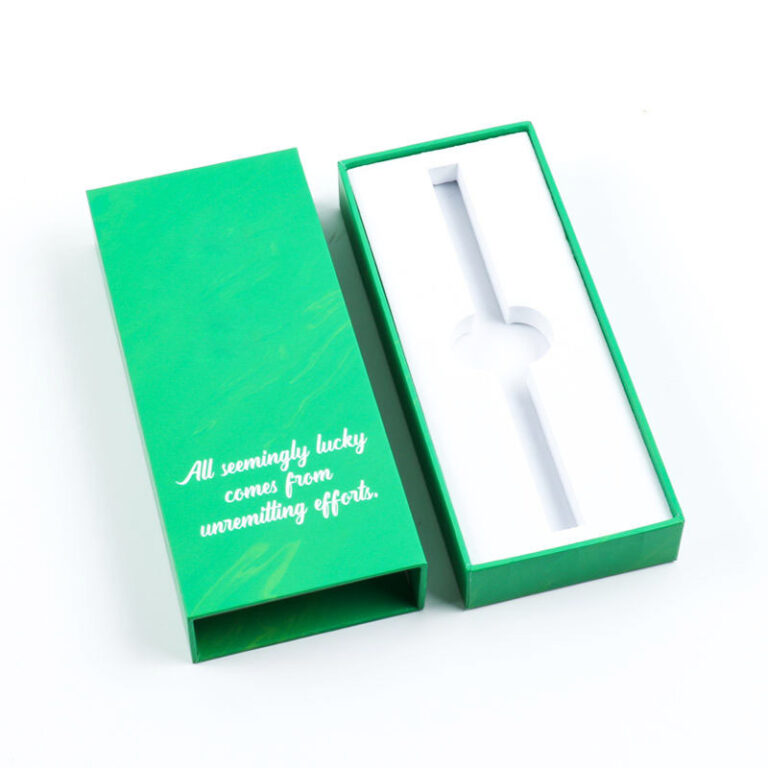
Sleeve and tray.
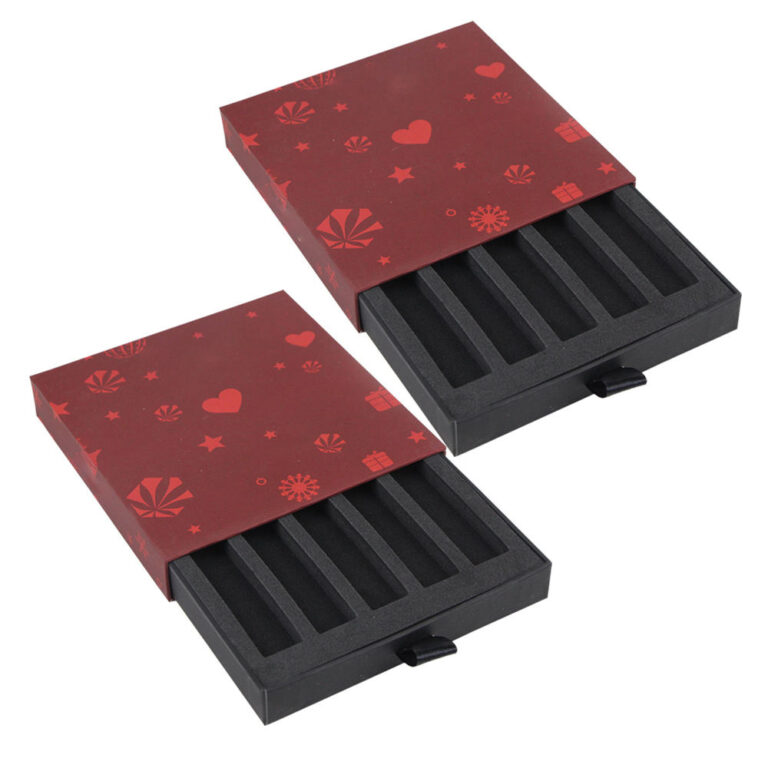
Paper drawer.
Rigid setup box.
Paper tube.
Compact bottle carton.
Multi-product presentation pack.
Insert-led kit.
They don’t feel the same when somebody handles them.
Then you’ve got the print-room toy chest: embossing, debossing, spot UV, hot foil, cold foil, uncoated stocks, textured paper, soft-touch lamination, printed interiors, die-cut openings, edge treatments.
And yes, those can look excellent.
Until somebody uses all of them.
I’ve seen specifications that feel like the designer walked through the finishing menu with a highlighter and refused to leave anything behind.
Foil?
Yes.
Emboss?
Yes.
Spot UV?
Absolutely.
Texture?
Why not.
Soft-touch?
Obviously.
At that point it’s not luxury.
It’s panic with a tooling bill.
For a multi-SKU CBD range, I’d rather see disciplined repetition: hold the typography, structural family, logo position, basic grid, and information architecture steady, then let color, secondary graphics, patterns, or selective finish separate the variants.
Same family.
Different product.
Simple idea.
Surprisingly easy to mess up.
4. CBD Packaging Boxes Have to Hold Something
Now shake the carton.
Did the bottle move?
Did you hear it?
That’s the moment a beautiful 3D rendering meets gravity.
A 30 mL dropper bottle bouncing around inside a carton might photograph nicely when the pack is propped open at a 45-degree angle under studio lighting, but once somebody actually picks it up, that hollow little clack-clack tells a completely different story.
Premium?
Not really.
This is why structural work matters.
Custom CBD packaging boxes can be built from actual container geometry—diameter, shoulder, cap, dropper, label thickness, base profile—not just an approximate dimension pulled from an old supplier drawing.
Depending on the job, the restraint might be a folded paperboard insert, bottle-neck cradle, shoulder lock, molded pulp tray, partition, foam, EVA, or nothing complicated at all.
Sometimes the clever solution is just:
Make the box smaller.
Radical, I know.
Different product formats create different headaches too.
Glass tincture bottle? Movement and breakage.
Topical jar? Diameter and lid clearance.
Tube? Compression and end loading.
Multi-product kit? Now you’re nesting several objects, maybe with different heights and centers of gravity, and hoping the insert doesn’t turn into a paper engineering science project.
Then there’s line packing.
People forget line packing.
Can an operator drop the bottle in cleanly?
Does the label catch on the insert?
Does a paper lock need to be flexed by hand?
Can somebody assemble 800 pieces without destroying their thumbs?
That’s where fancy structural ideas go to die.
Packaging lives on a production table, not inside KeyShot.
5. Smart Packaging Design Can Reduce Dangerous Product Confusion
How cute is too cute?
Good question.
In July 2024, the FDA and FTC issued warning letters concerning delta-8 THC products sold in packaging that imitated familiar chips, candy, and snack brands. Regulators specifically raised concerns about accidental consumption and the risk to children. The action followed similar warnings in July 2023.
But the packaging lesson still bites: if a cannabinoid product is visually borrowing so heavily from everyday candy, cookies, chips, or snacks that identity gets muddy, the artwork may be clever while the actual communication is terrible.
That’s especially uncomfortable around edibles.
Can CBD gummy packaging be colorful?
Obviously.
Can it have personality?
Please.
Does it need to look like a children’s candy pouch in order to stand out?
No.
Here’s my bias: if the design team has to spend ten minutes explaining why the package technically isn’t confusing, the package probably needs another round.
Maybe two.
Put product identity into the creative brief early.
Not after the team has emotionally adopted Concept C.
6. A Custom System Makes SKU Expansion Less Painful
SKU one is a liar.
Seriously.
One box makes everything look easy.
One dieline.
One barcode.
One strength.
One artwork file.
One product.
Then somebody says, “Sales wants a 1,000 mg version.”
Okay.
Then peppermint.
Then broad-spectrum.
Then a topical.
Then another bottle supplier.
Then a retailer asks for a slightly different panel.
Then the old 30 mL container disappears and its replacement is 1.5 mm taller at the cap.
Tiny change.
Until the insert stops closing properly.
This is where a packaging system beats a collection of attractive individual boxes.
Packaging Variable
What You Standardize
What You Change by SKU
Business Benefit
Structural format
Carton style and construction
Dimensions when required
Easier procurement
Brand zone
Logo position and typography
Usually unchanged
Consistent recognition
Product identity
Information hierarchy
Product type or strength
Faster SKU scanning
Color system
Core palette
Accent color
Easier range navigation
Insert design
Material concept
Cutout geometry
Better product fit
Tracking
Location of code area
Lot, batch, QR, barcode
Improved traceability
Finishing
Core specification
Selective premium effects
Cost control
This isn’t glamorous packaging talk.
Good.
Procurement isn’t glamorous.
It’s RFQs, MOQs, cutters, tooling amortization, press proofs, artwork locks, Delta E conversations, lead times, partial shipments, freight cubes, carton utilization, safety stock, PO releases, revision control, and somebody sending a file named:
CBD_BOX_NEW_FINAL_v8_FINAL_APPROVED_USE_THIS.pdf
We’ve all seen the species.
The point is simple: every variable you can standardize without harming the product removes another opportunity for errors, duplicate tooling, artwork confusion, slower approvals, or inventory nobody wants six months later.
Boring scales.
Chaos doesn’t.
7. Custom CBD Packaging Has to Survive the Shelf and the Thumbnail
Shrink your front panel to about the size of a postage stamp.
Still recognizable?
Hmm.
Retail and e-commerce punish packaging in completely different ways, because the physical carton might be viewed from three feet away under ugly fluorescent lighting while the online version becomes a tiny rectangle surrounded by price, reviews, promotional badges, and four competitors.
Then somebody zooms in.
Now every mistake is huge.
I like a crude test:
Shelf distance. Thumbnail size. Full zoom.
Nothing sophisticated about it.
Useful anyway.
Shelf distance: can you identify the product?
Thumbnail: can you separate this SKU from the next one?
Full zoom: does the design still look controlled, or are you suddenly noticing crooked icon spacing, orphaned words, microscopic panel copy, and four typefaces fighting over the same 60 mm?
Ouch.
And there’s another audience designers conveniently forget.
Warehouse people.
Side-panel SKU IDs matter.
Barcode placement matters.
Readable strength identification matters.
Case labels matter.
If a picker has to rotate every carton twice to distinguish 500 mg from 1,000 mg, the brand guide may be beautiful and the packaging system may still be lousy.
Operations eventually finds design.
Always.
8. Premium Packaging Can Raise Perceived Value—But Calm Down
Let’s kill one slogan.
“Premium packaging means you can charge premium prices.”
Not necessarily.
A rigid box isn’t financial engineering.
Neither is foil.
Neither is a magnetic flap.
A weak product in a beautiful box remains a weak product once the box is open.
Still, first impressions exist, and pretending otherwise is silly. Board feel, print registration, opening resistance, surface finish, fit, insert retention, typography, and the little mechanical details of how a pack opens all affect the way somebody reads the product before they’ve experienced what’s inside.
That’s where premium custom CBD packaging can make sense.
CBD skincare set?
Maybe.
Three-product gift kit?
Sure.
Launch box?
Could work.
Influencer seeding kit?
Potentially.
Basic $25 bottle?
Do you really need wrapped greyboard, two magnets, EVA, ribbon, hot foil, spot UV, soft-touch film, and full-color interior printing?
Maybe not.
Actually, probably not.
I frankly believe over-packaging burns an astonishing amount of margin because it’s psychologically easy to mistake manufacturing cost for brand value.
They’re not the same thing.
Sometimes the best CBD pack is a clean SBS folding carton, one well-engineered paper insert, sharp print, readable hierarchy, and nothing else.
No theater.
Just good packaging.
Where Custom CBD Packaging Creates Value — and Where It Can Fail
Customization gives you more control.
Unfortunately, it also gives you more things to screw up.
Packaging Decision
Potential Advantage
Common Failure
Custom structure
Better fit and presentation
Over-engineered box raises cost
Clear label hierarchy
Easier product identification
Marketing copy overwhelms key facts
Premium finishing
Stronger shelf presence
Too many finishes create visual noise
SKU color coding
Faster differentiation
Colors become inconsistent across print runs
Protective insert
Less product movement
Insert designed without final production sample
QR code
Access to supporting information
Dead or unmaintained destination
Child-resistant feature
Added access control where required/appropriate
Assuming one design meets every jurisdiction
Custom size
Lower dead space
Size approved before final container dimensions
Look at the last row again.
That’s one of those mistakes that sounds laughably small in a design meeting.
“We’re only off by 2 mm.”
Right.
Except the bottle shoulder has its own tolerance, the label adds material, the cap supplier changed, the insert board springs back after die-cutting, the lamination changes friction slightly, and suddenly your “snug fit” is an assembly operator forcing bottles into paperboard all afternoon.
Two millimeters.
Big meeting.
Don’t release a cutter from guessed dimensions if you’ve got access to an actual production container.
Please.
Before You Approve a CBD Packaging Design, Ask the Annoying Questions
What’s going inside?
Start there.
Not with foil.
Not with color.
Not with the logo.
Bottle?
Jar?
Tube?
Pouch?
Cartridge?
Tin?
Dropper?
Three-piece kit?
Get the actual production object when you can.
Measure it.
Measure it again.
Then check the bits nobody wants to discuss in the concept presentation: closure clearance, net quantity, cannabinoid terminology, strength, ingredient area, lot-code zone, barcode quiet zone, warning copy, QR size, insert geometry, board caliper, grain direction where relevant, printing method, laminate, scoring, glue area, pack-out sequence, shipping orientation, master-carton count.
Exhausted yet?
Good.
This is where expensive mistakes hide.
The target market matters as well. CBD requirements aren’t identical across product forms, jurisdictions, and distribution channels, and FDA’s current public information continues to describe federal restrictions involving CBD in conventional foods and dietary supplements.
So don’t design the entire carton and then ask legal to “fit the compliance stuff somewhere.”
That’s how 6-point text happens.
Work out what the product is.
Where it’ll be sold.
What claims are approved.
What language is defensible.
What information needs to survive future versions.
Then build the packaging around those facts.
Less exciting.
Much cheaper.
FAQs
What is custom CBD packaging?
Custom CBD packaging is packaging designed specifically around a CBD product’s dimensions, format, branding, information hierarchy, protection requirements, sales channel, and applicable market requirements rather than using an unmodified stock box or container. It can include custom cartons, rigid boxes, inserts, sleeves, tubes, labels, printing, finishes, and other structural components.
In ordinary language?
You make the package fit the product.
Not the other way around.
With one SKU, that difference can look minor. With ten strengths, three container sizes, two formulations, several barcodes, and revised warning copy?
Not minor anymore.
What are the main benefits of custom CBD packaging?
The main benefits of custom CBD packaging include clearer product identification, stronger brand differentiation, improved physical protection, more organized labeling, easier SKU management, better retail presentation, support for safer package design, and greater control over the perceived value of the finished product.
Here’s the catch.
“Custom” doesn’t mean “complicated.”
Please don’t make that mistake.
A folding carton with clean print, sensible hierarchy, the correct caliper, and one clever paper insert may be a far better commercial solution than a monster presentation box containing four materials, magnets, foam, ribbon, and a pack-out sequence nobody wants to repeat 20,000 times.
Fancy can hurt.
What information should be included on CBD packaging?
CBD packaging should be developed around the product type, target market, applicable laws, and sales channel, with space considered for product identity, net quantity, cannabinoid information, ingredient or formulation details, manufacturer information, traceability codes, barcodes, usage information, warnings, and other legally required statements where applicable.
That’s a planning framework.
Not a universal legal checklist.
The exact requirements depend on what you’re selling and where you’re selling it.
Claims deserve even more caution. In August 2024, FDA issued a warning letter to Root Bioscience Brands concerning CBD, CBG, and CBN products marketed with claims that, according to the agency, caused them to be treated as unapproved new drugs.
A claim doesn’t become safer because it’s printed in tasteful serif type.
That’s worth remembering.
Does CBD packaging have to be child-resistant?
Whether CBD packaging must be child-resistant depends on the jurisdiction, product type, cannabinoid content, distribution channel, and local regulations, so businesses should verify the exact rules that apply to each product before selecting a closure or box structure. A standard folding carton should not automatically be described as child-resistant without appropriate testing or evidence.
This is where packaging language gets sloppy.
“Hard to open” isn’t a technical standard.
A weird locking tab isn’t automatically child-resistant.
And a child-resistant primary bottle closure doesn’t automatically make the surrounding secondary carton child-resistant either.
Different component.
Different claim.
Get the evidence first.
Print the claim second.
What is the best CBD packaging for a business?
The best CBD packaging is the format that balances product protection, regulatory needs, customer usability, brand positioning, manufacturing cost, shipping efficiency, storage requirements, and order volume rather than simply choosing the most expensive or visually elaborate box available.
Which means there isn’t one universally “best” CBD box.
Sorry.
For one tincture bottle, a compact folding carton and paperboard restraint could be exactly right.
For a high-end three-piece skincare set?
Probably a different answer.
Context wins.
Again.
How does custom CBD packaging help a business grow?
Custom CBD packaging can support business growth by making products easier to recognize, compare, merchandise, ship, identify by SKU, and present consistently across physical retail and e-commerce, while also giving the brand more control over labeling, packaging specifications, customer experience, and future product-line expansion.
But let’s not turn cardboard into mythology.
Packaging is leverage.
Not life support.
Bad formulation?
Packaging can’t fix it.
Weak unit economics?
Still can’t.
Questionable claims?
Definitely can’t.
Fulfillment falling apart?
Nice foil isn’t coming to rescue you.
What good packaging can do is remove another source of friction.
And honestly, that’s valuable enough.
Build CBD Packaging Around the Product, Not the Mood Board
Before asking whether the foil should be champagne gold or pale silver, ask uglier questions.
What’s the final bottle size?
Actually final?
Or “supplier says final”?
Which copy has regulatory approval?
How many SKUs will share the cutter?
Where does the lot code print?
Who’s maintaining the QR destination?
What happens if the barcode moves 4 mm?
Can you recognize the strength from a shelf edge?
Can the paper insert tolerate normal bottle variation without crushing the label?
Can someone assemble 1,000 units without needing a special little finger gymnastics routine?
Will the carton still close after the product is loaded?
Will twenty finished units fit the master carton the way the spreadsheet says they will?
Those questions aren’t glamorous.
Neither is a rejected production run.
Here’s the ugly truth: expensive packaging failures often aren’t born from some spectacular creative disaster; they come from tiny, boring assumptions that nobody challenged early enough—an outdated CAD dimension, unapproved copy, the wrong dieline revision, a coating nobody tested, a toleranced bottle treated like a mathematically perfect cylinder.
That’s packaging.
Tiny errors.
Large invoices.
So if you’re developing custom CBD packaging, get a dieline. Make a white sample. Better yet, make a printed prototype if the budget and timing allow. Put the actual product inside.
Then abuse it a little.
Shake it.
Open it.
Close it.
Scan it.
Read it.
Turn it sideways.
Pack it into the master case.
Hand it to somebody who hasn’t spent three weeks staring at the artwork and watch what they do.
Do they know where to open it?
Can they identify the product?
Can they remove it cleanly?
Does the bottle rattle?
Does the barcode scan?
Does the QR work?
Good.
Now talk about foil.
Ready to develop your CBD packaging? Request a custom quote, send your final product dimensions, or ask for a structural sample before committing to mass production.