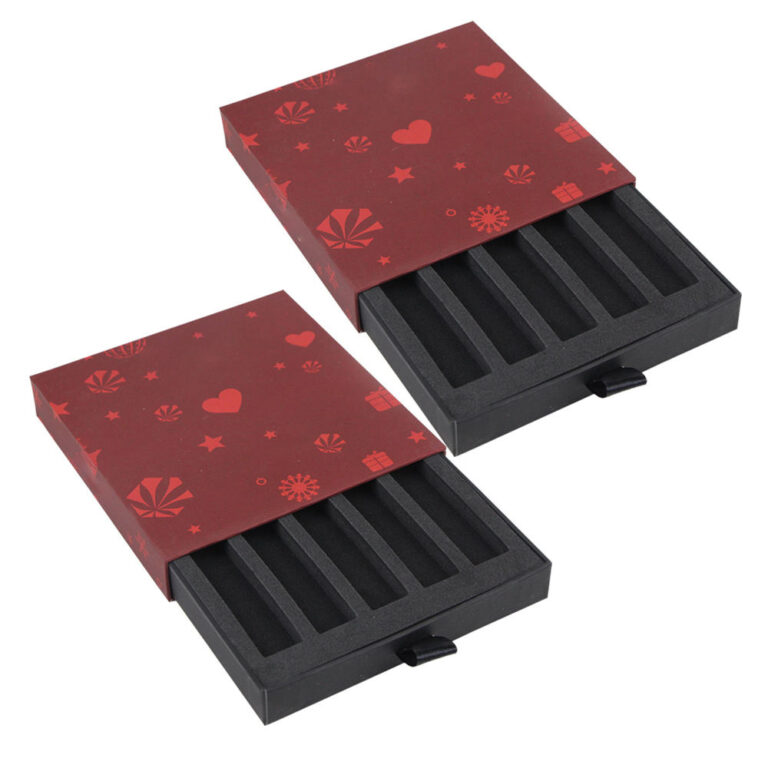
Someone brings out a mood board: black paper, soft-touch lamination, a spot-UV logo, maybe a bit of gold foil. Everyone talks about “premium positioning” for twenty minutes. Then, almost as an afterthought, somebody asks whether the pack actually works for California, New York, Oregon—or wherever the product is going.
Wrong order.
And it can get expensive, because once the dieline is locked, foil dies are cut, paper is bought, inserts are tooled and decorated samples are approved, discovering that the warning copy doesn’t fit or the supposed child-resistant feature isn’t actually supported by the right testing is no longer a design correction.
It’s scrap.
Here’s the ugly truth: good cannabis packaging starts with the regulatory and structural problem, not the artwork.
What are we packing?
Where will it be sold?
Does the consumer open the carton once, or repeatedly? Does the jar inside already carry the child-resistant function? Does the outer box need to be opaque? Is there enough panel real estate for 6-point regulatory copy after the designer finishes “cleaning up” the layout?
Those questions sound boring.
They’re not.
A 2023 Pediatrics study analyzing National Poison Data System records found 7,043 edible-cannabis exposures among children younger than six between 2017 and 2021. Cases rose from 207 in 2017 to 3,054 in 2021—a 1,375% increase—and 22.7% of reported patients were admitted to a hospital. Pediatric Edible Cannabis Exposures and Acute Toxicity: 2017–2021
That isn’t an abstract packaging-industry talking point. It’s the reason a cute pouch, a weak zipper, a cereal-style graphic or a badly specified closure can become a much bigger problem than a slightly misregistered foil logo.
Then came another warning.
In July 2024, the FDA reported that it had received more than 300 adverse-event reports involving Delta-8 THC products from January 2021 through December 2023. Nearly half involved hospitalization or emergency-department visits, while roughly two-thirds followed consumption of Delta-8 THC foods such as candy or brownies. FDA warning letter on Delta-8 THC products
Notice the pattern?
The box isn’t decoration wrapped around cannabis.
It’s part restraint, part information system, part shipping container, part retail salesman—and sometimes part safety mechanism. Trying to optimize only the last part, the “retail salesman,” is where teams get themselves into trouble.
What Is Custom Cannabis Packaging, Really?
Custom cannabis packaging is product-specific packaging developed around the cannabis format, selling jurisdiction, safety requirements, dimensions, required labeling, retail workflow, distribution conditions and brand system instead of taking a generic stock box and decorating it after the important engineering decisions have already been made.
That sounds technical because it is.
A 0.5 g vape cartridge doesn’t create the same packaging problem as a 3.5 g flower jar. A five-pack of pre-rolls isn’t a tincture bottle. A concentrate jar sitting in an EVA cavity behaves differently from a gummy pouch rattling around inside a folding carton.
Yet briefs still arrive with language such as:
“Need premium weed box.”
That’s not a brief.
It’s barely a noun.
A structural designer needs the physical component. Procurement needs volume. The compliance team needs the destination state. Prepress needs mandatory-copy zones. Production needs board caliper, wrap paper, tolerance and finishing information. QC needs something measurable beyond “make it look like the approved sample.”
Only then does it make sense to argue about Pantone numbers.
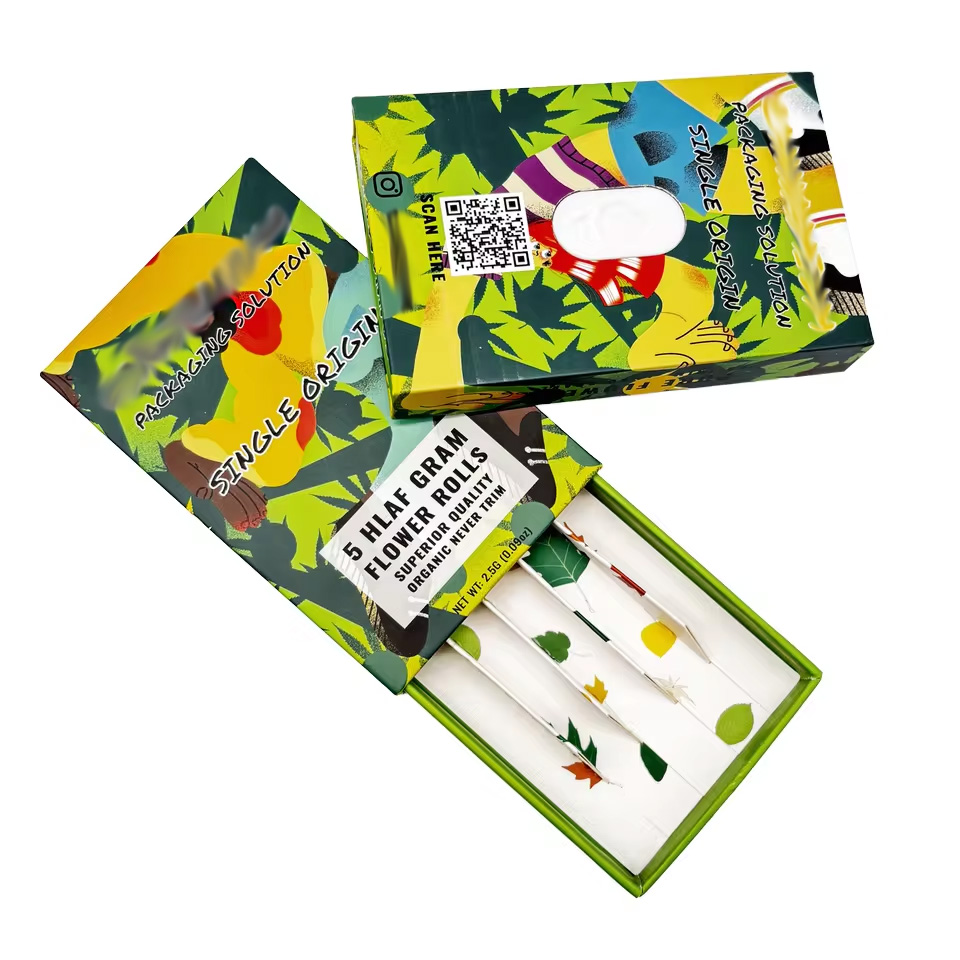
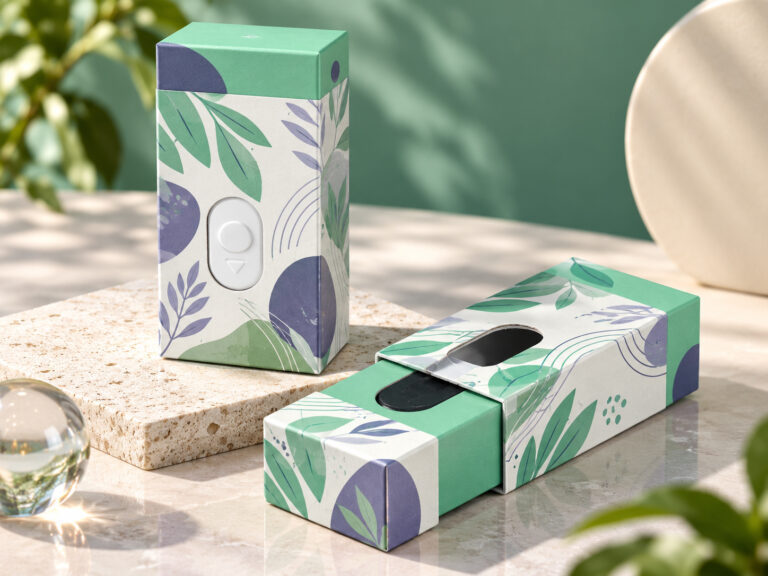
The reference guide from New World Packaging separates common solutions into folding cartons, rigid boxes and corrugated shipping cases. That’s useful as a starting point, but commercially I think another distinction matters more: which packaging layer is doing which job?Cannabis Packaging: The Ultimate Custom Box Guide
Think about a normal retail pack as a stack of functions rather than one object:
The primary container holds the product.
A CR mechanism may provide child resistance.
An insert controls movement.
The printed carton carries regulatory and brand communication.
A rigid presentation shell may create the opening experience.
A master case gets the whole thing through freight without turning corners white.
Same SKU.
Different jobs.
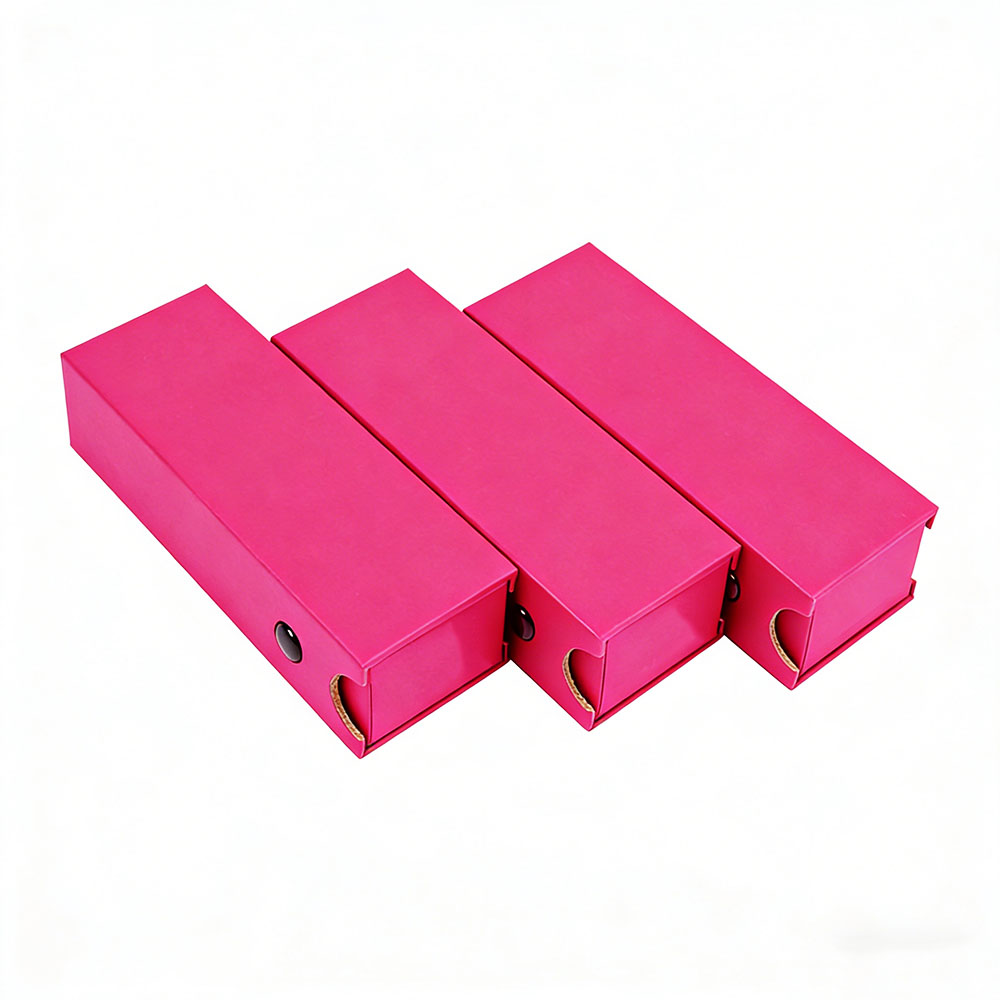
A folding carton around an already compliant CR jar may be primarily a marketing-and-information layer. A locking rigid box might be intended to perform the child-resistant function itself. Those aren’t minor variations of the same packaging idea—they’re different engineering systems, with different documentation requirements and different failure points.
That distinction gets missed constantly.
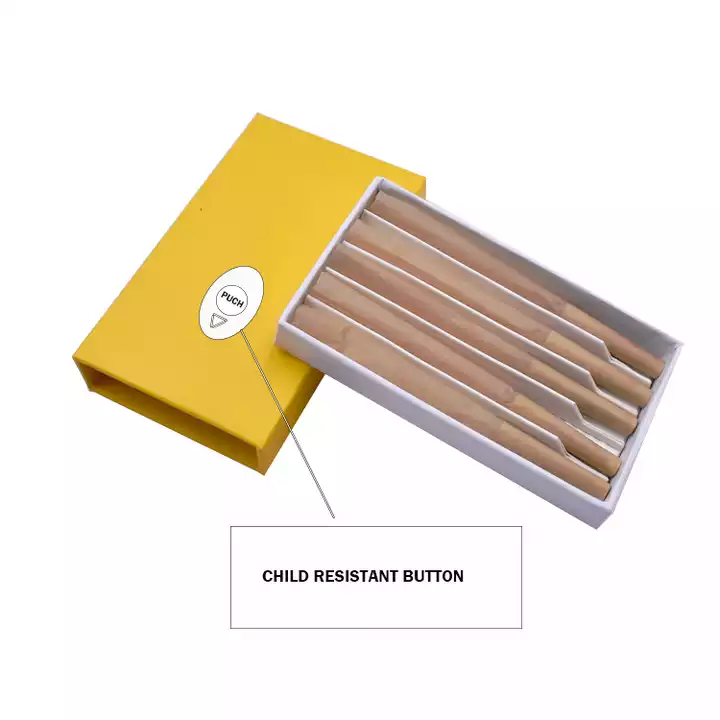
Child-Resistant Cannabis Packaging Isn’t a Fancy Closure
I’ve seen the phrase “child resistant” used far too casually in packaging sales language.
Push button?
Child resistant.
Odd opening direction?
Child resistant.
Hidden tab?
Apparently child resistant too.
No.
A mechanism that looks difficult isn’t the same thing as a package supported by recognized testing.
In the United States, cannabis regulators frequently reference the federal Poison Prevention Packaging Act framework under 16 CFR §§ 1700.15 and 1700.20 when defining qualifying child-resistant packaging.
CPSC’s benchmark isn’t subjective: at least 85% of children in the test group must fail to open the qualifying package during the first five minutes, and at least 80% must still fail over the complete ten-minute test. Adult usability matters too; at least 90% of adults must be able to open the package within five minutes and, where applicable, properly resecure another package within one minute. CPSC Business Guidance FAQ
That’s engineering.
Not vibes.
And there’s another trap here: buyers sometimes assume that if a supplier has one certified CR structure, any similar-looking version must also be covered.
Maybe not.
Change a locking tab. Change the substrate. Change the opening geometry. Change dimensions significantly. Now ask the uncomfortable question: does the existing report still apply to this exact configuration?
Ask before the PO.
California makes the product format matter
California’s Department of Cannabis Control requires cannabis goods to be sold in child-resistant packaging and distinguishes between packages that provide initial child resistance and packages that must maintain the required function through repeated use. California child-resistant packaging guidelines
That distinction changes structure.
Flower, pre-rolls, topicals, dab products and vape cartridges can fall into different practical packaging paths than products such as multi-serving edibles or orally consumed concentrates.
And California’s finished-package rules don’t stop at CR.
A procurement person reading that should immediately see the problem with buying “one universal cannabis box.”
It sounds efficient.
Until it isn’t.
New York makes the spec sheet even less forgiving
New York goes its own way.
Its Office of Cannabis Management requires retail cannabis packages to remain child-resistant through the life of the product, be tamper-evident, fully enclose the contents, protect against contamination and degradation, and be resealable where multiple servings are involved.
Then the material spec enters the conversation.
Plastic cannabis packaging generally must contain at least 25% post-consumer recycled content, with stated exceptions, phase-in provisions and documentation requirements. New York Part 128 packaging and labeling guidance
Now imagine the sourcing meeting.
Marketing wants crystal-clear virgin PET because it photographs beautifully.
Operations wants a standard component because tooling already exists.
Sustainability wants PCR.
Compliance wants evidence.
Packaging engineering is sitting in the middle asking whether the latch still performs correctly after the resin formulation changes.
Welcome to cannabis packaging.
Which Cannabis Packaging Structure Actually Makes Sense?
“What’s the best cannabis packaging?”
I don’t love that question.
Best at what?
Best freight cube? Best shelf presentation? Best protection? Best unit price? Best assembly speed? Best for automated filling? Best for a launch kit being handed to influencers?
The answer changes fast.
So here’s a more useful comparison.
Packaging Format
Typical Cannabis Applications
Main Advantages
Main Procurement Concerns
Folding Carton
Vape cartridges, pre-roll tubes, tincture bottles, small jars
Lightweight, efficient printing, lower material use, good retail graphics
May require a separate child-resistant primary package; board strength and insert tolerances matter
Folding cartons are boring. That’s partly why I like them.
No one posts breathless LinkedIn content about a clean SBS folding carton.
But they solve problems.
They ship flat. They’re efficient to print. They play nicely with paperboard inserts. They give regulatory copy somewhere to live. They’re easier to change than a complicated rigid structure, and at scale the freight cube difference can be painful enough to make a “luxury” box look a lot less glamorous on the landed-cost spreadsheet.
For a vape cartridge inside an already compliant primary pack?
A folding carton may be exactly right.
Same for a tincture bottle or small concentrate jar where the carton doesn’t need to carry the CR burden itself.
And here’s something packaging teams sometimes forget: premium doesn’t mean thick.
Tight register. Clean creases. Dense black. Correct grain direction. A disciplined foil hit. No cracking on the score. An insert that doesn’t squeak or bow.
That’s premium too.
I’d rather see an ordinary-looking carton executed extremely well than a 1,500 gsm rigid box with mushy wrapped corners and a crooked insert.
Rigid boxes earn their keep in narrower situations
Rigid packaging can be gorgeous.
There, I said it.
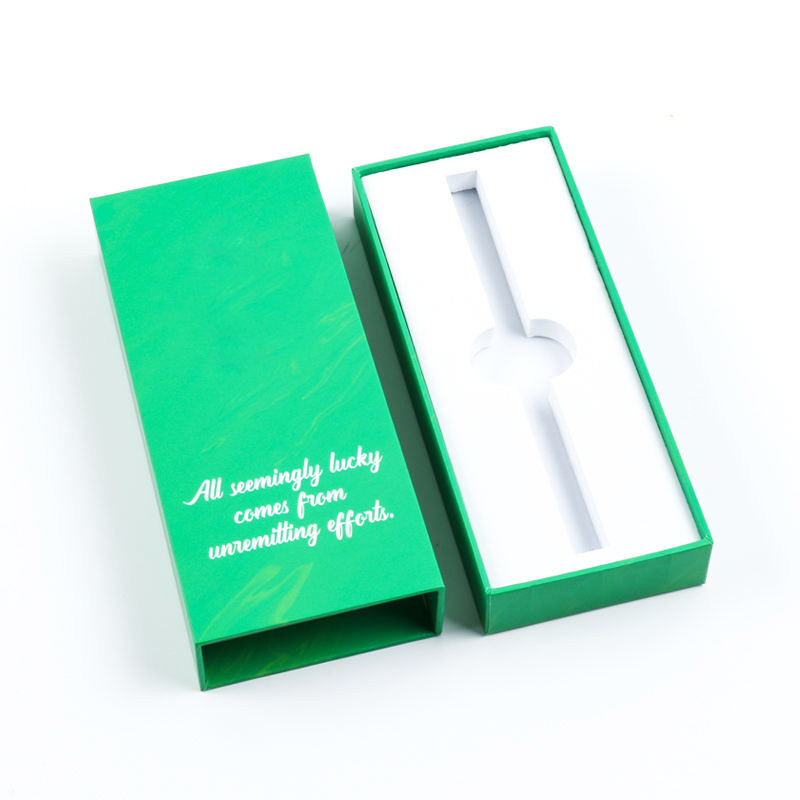
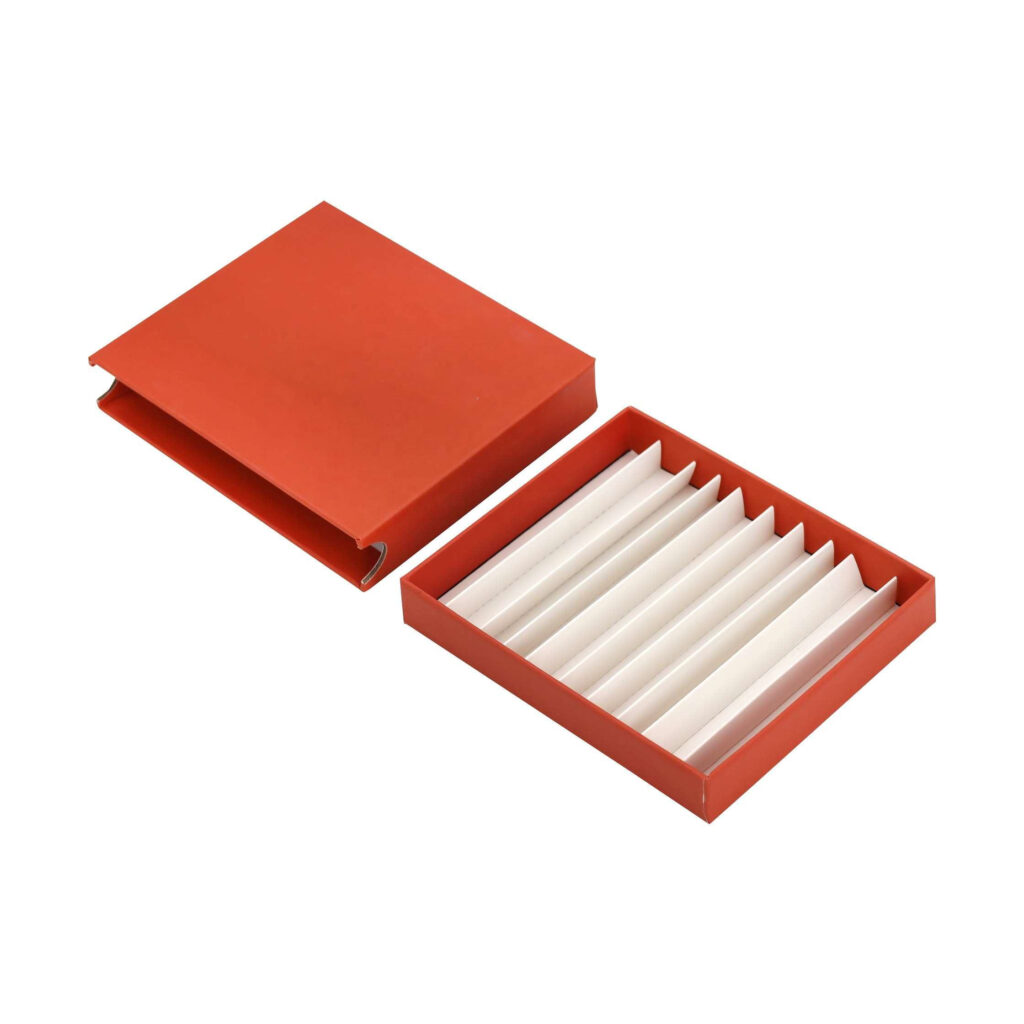
For concentrate sets, multi-component vape kits, launch editions and products where presentation is genuinely part of the commercial proposition, rigid setup boxes give designers room to work with sequencing, depth, texture and component reveal in ways a basic carton can’t.
Typical finishing options include:
Hot foil stamping
Embossing
Debossing
Spot UV
Matte or gloss lamination
Specialty paper wraps
Pantone spot colors
Printed interiors
But every decorative decision drags a little production baggage behind it.
Soft-touch film can complicate recyclability.
Foil crossing a groove may crack or distort.
Heavy solid ink over an absorbent specialty paper may not look like the designer’s backlit monitor.
Wrapped greyboard adds handwork.
Thick EVA inserts eat freight cube and can smell unpleasant when poorly specified.
Magnets introduce another material stream.
Nothing is free.
Not even beauty.
Cannabis Packaging Design Has to Give Compliance Some Breathing Room
Designers hate dead space.
Compliance teams love it.
That’s the fight.
California, for example, requires manufactured cannabis-product labels to carry defined information on the primary and informational panels, and its universal cannabis symbol must be conspicuous and at least 0.5 inch high in the circumstances described by the state. California manufactured cannabis labeling requirements
The state’s labeling guidance also calls for clearly displayed English-language information using type no smaller than 6 point, while restricting misleading claims and certain youth-oriented presentation. California manufactured-product labeling checklist
Six point isn’t much.
Until the box is tiny.
Then suddenly the designer is squeezing ingredients, potency information, warnings, a barcode, legal text, a symbol and branding onto something the size of a deck of cards.
That’s why I like separating artwork mentally into three systems.
This is the stuff the creative director wants to protect.
Fair enough.
The regulatory layer
Warnings. Product identity. Universal symbol. Net contents. Ingredients. Cannabinoid information. License data. Anything the jurisdiction requires.
Don’t scatter this randomly around the dieline because “there was some room beside the flap.”
Give it a home.
The variable production layer
Lot code. Batch code. Potency results. Date information. Variable SKU content. Product-specific sticker fields.
This layer changes.
Plan for that.
Otherwise every potency update turns into a packaging redesign, or somebody ends up slapping an ugly white sticker over the most expensive foil area on the box.
I’ve seen enough packaging photos to know how that movie ends.
Not well.
And regulation itself moves.
In May 2024, the U.S. Department of Justice proposed moving marijuana from Schedule I to Schedule III under the Controlled Substances Act following an August 2023 HHS recommendation. Reuters noted that the proposed rescheduling would not itself federally legalize recreational marijuana. Reuters report on the U.S. marijuana rescheduling proposal
That’s why I’d be very careful with packaging systems that assume today’s compliance copy will remain untouched for five years.
Maybe it will.
Wouldn’t bet tooling on it.
The Youth-Appeal Problem: Cannabis Packaging Doesn’t Need to Cosplay as Candy
This one gets awkward.
Marketing wants impact.
Retail buyers want something visible from six feet away.
Designers want freedom.
Regulators look at a neon gummy pouch with cartoon fruit wearing sunglasses and see something entirely different.
The CDC warns that some THC edibles are packaged to resemble recognizable snacks and candy, which can contribute to accidental ingestion risks among children. CDC guidance on cannabis and poisoning
Then enforcement started making the issue impossible to ignore.
In 2023, the FDA and FTC sent warning letters to six companies selling Delta-8 THC food products presented as copycat versions of familiar chips, cookies, candies and other snacks. FDA and FTC warning on copycat Delta-8 THC foods
California also specifically warns against packaging characteristics that can make cannabis products attractive to children, including imitation of youth-oriented consumer products and other child-appealing cues. California guidance on cannabis products attractive to children
I frankly believe the “compliance kills creativity” complaint is mostly lazy thinking.
Constraints make bad ideas harder.
That’s not the same thing.
How to Choose Cannabis Packaging Without Burning Money
Want to make a packaging supplier nervous?
Send artwork and no product sample.
It happens.
A buyer sends a beautiful AI render or CAD-looking mockup of a concentrate jar, asks for a snug-fit insert and expects the vendor to reverse-engineer production dimensions from the image.
Nope.
Before serious production pricing begins, the RFQ should contain enough information to build something that can actually be manufactured.
Start with the real product
Not “cannabis.”
The real thing.
Flower
Vape cartridge
Disposable/integrated vaporizer where applicable
Pre-rolls
Concentrate jar
Edible
Tincture
Topical
Capsule
Accessory kit
Each creates a different pack-out.
A heavy glass concentrate jar needs different retention than a lightweight cartridge. A pre-roll tube has completely different tolerance behavior from a dropper bottle. Edibles introduce another set of opacity, resealability and barrier questions.
Details first.
Measure the component people will actually buy
CAD is useful.
Physical production samples are better.
For a jar, don’t stop at “45 mm diameter.” Cap OD matters. Shoulder matters. Label stock thickness can matter. Mold variation may matter. A taper on the sidewall definitely matters if you’re trying to friction-fit it into a paperboard insert.
For vape hardware, mouthpiece geometry can be annoying.
A 1 mm error is tiny on a website.
Inside a precision die-cut slot?
Not tiny.
Name the destination market before quoting
California.
New York.
Oregon.
Canada.
Europe.
Whatever the actual project requires.
Don’t write “USA market” and move on.
Oregon, for example, maintains its own cannabis packaging framework and addresses child-resistant certification, single-use versus continually child-resistant packaging and product-category requirements. Oregon marijuana packaging and labeling FAQ
Different market.
Different headache.
Decide where the CR function lives
This question saves endless confusion:
Which component is actually child resistant?
The jar?
The pouch?
The carton?
A locking rigid box?
An allowable exit package?
Some combination?
Write it down.
Then ask for documentation that corresponds to that configuration.
Supplier says, “Yes, CR certified”?
Good.
Ask for the report.
Check the construction.
Check the size family.
Check whether your intended pack matches what was evaluated.
Paperwork is less glamorous than foil.
Still important.
Build the labeling architecture early
I like zoning the dieline before the graphic designer gets emotionally attached to every square millimeter.
Reserve areas for:
Brand panel
Legal-information panel
Universal symbol
Warning area
Potency area
Barcode
QR code where applicable
Batch/lot information
Variable sticker area
Then design.
Not backwards.
Ask what happens after the Instagram photo
This is the part people forget.
The box leaves the photo studio.
Then it sits in a master carton, gets stacked, trucked, maybe ocean-freighted, moved through a fulfillment center, opened by a retailer, shoved into inventory and handled by somebody who does not care about your pristine matte lamination.
Test for reality.
Watch:
Insert movement
Edge abrasion
Compression
Humidity
Carton deformation
Surface scuffing
Glue failure
Closure fatigue
Barcode readability
Case-pack efficiency
A beautiful box arriving with rubbed corners isn’t premium packaging.
It’s damaged packaging.
A Better Custom Cannabis Packaging Development Process
I don’t like twenty-seven-stage workflows.
People stop following them.
Seven gates is enough.
Gate 1: Regulatory review
Figure out where the SKU will be sold and what package-level requirements apply.
Do this before structural design.
Yes, before.
Gate 2: Product measurement
Get the production component, engineering drawing or controlled CAD.
Don’t dimension from a screenshot.
Please.
Gate 3: Structural concept
Now choose the architecture: folding carton, rigid box, drawer, tube, pouch, insert system, hybrid construction.
At this stage you’re solving geometry—not chasing finishes.
Gate 4: Child-resistant verification
Identify exactly which component provides CR performance.
Then match documentation to it.
If the supplier gets vague here, keep asking questions.
Check color under real light—not just a phone camera. Look at foil registration around scores. Flex the closure ten or twenty times. Remove and replace the product.
Abuse the sample a little.
Retailers will.
Gate 7: Golden-sample approval and production freeze
This is where vague language needs to die.
Lock:
Board or substrate
Thickness
Paper
Print method
Colors
Finish
Insert
Closure
Adhesive
Tolerances
Pack-out
Master carton
Inspection standard
One approved sample without an agreed written spec isn’t quality control.
It’s a souvenir.
FAQs
What is custom cannabis packaging?
Custom cannabis packaging is packaging developed specifically around a cannabis product’s physical dimensions, intended sales jurisdiction, safety requirements, labeling obligations, retail presentation, distribution conditions and brand system instead of relying on a generic stock container that is simply printed or labeled after the core structural decisions have already been made.
In practical terms, that may mean a folding carton around a CR jar, a locking rigid box with a paperboard insert, a pre-roll tube, a pouch, or several layers working together. “Custom” should describe engineering as much as appearance.
What makes cannabis packaging child resistant?
Child-resistant cannabis packaging is packaging designed and tested so that young children have substantial difficulty accessing its contents while adults can still open and, where required, correctly resecure the package, with many U.S. cannabis regulations referencing the performance and testing framework contained in 16 CFR §§ 1700.15 and 1700.20.
That’s why a hidden tab or push-button closure shouldn’t automatically be called CR. The construction, test evidence and applicable configuration matter. CPSC Business Guidance FAQ
Does every custom cannabis box need to be child resistant?
Not every decorative outer cannabis box necessarily has to perform the child-resistant function itself, because some packaging systems rely on a compliant primary container or another legally permitted layer; however, the exact requirement depends on product type, package configuration, serving format and the jurisdiction in which the cannabis product will be sold.
That’s the key distinction. A marketing carton around a qualifying CR container is a different proposition from a rigid box being sold as the safety closure itself. California, New York and Oregon don’t reduce neatly to one national rulebook. California final-form cannabis packaging requirements
What is the best cannabis packaging for brands?
The best cannabis packaging is the structure that satisfies applicable legal requirements, protects the product through distribution, consistently fits the primary container, provides enough room for mandatory information, supports the intended retail experience and remains economically sensible at the required production volume without adding unnecessary material, freight or assembly complexity.
Sometimes that’s a luxury rigid box.
Sometimes it’s a clean folding carton.
Procurement people generally figure this out faster once landed cost—not just unit price—enters the conversation.
Are rigid boxes suitable for cannabis packaging?
Rigid cannabis boxes can be suitable for premium cannabis products when their protection, structural presentation, insert system and opening experience justify the additional material, assembly labor and freight volume, but a conventional rigid box shouldn’t be assumed to satisfy child-resistant requirements unless the relevant packaging configuration is supported by appropriate testing and documentation.
They make sense for some concentrate sets and premium vape kits.
But “thicker” doesn’t automatically mean “better.”
What information should I give a cannabis packaging manufacturer?
A cannabis packaging manufacturer should receive the exact product type, verified component dimensions, destination market, required child-resistant strategy, projected order quantity, labeling zones, material preferences, insert requirements, printing and finishing expectations, distribution method, pack-out requirements and any required testing or documentation before the supplier is expected to provide production-ready pricing.
That information turns an RFQ into something useful.
Without it, you’re mostly collecting guesses with dollar signs attached.
How should cannabis packaging design address compliance?
Cannabis packaging design should reserve intentional, measurable space for jurisdiction-specific warnings, required cannabis symbols, product identity, cannabinoid information, net contents, ingredients, batch or tracking details and other mandatory information before decorative artwork is finalized, rather than trying to squeeze regulatory content into whatever unused area remains at the end of the design process.
Why should cannabis packaging avoid looking like candy?
Cannabis packaging should avoid imitating candy, cookies, cereal, chips, soda or other youth-oriented consumer products because regulators and public-health authorities have documented concerns that familiar food-style graphics, names and package formats can increase the risk that children or uninformed consumers mistake THC-containing products for ordinary snacks.
Should brands prototype cannabis packaging before mass production?
Cannabis brands should prototype packaging before mass production because an undecorated structural sample can expose product-fit, closure, insertion, tolerance, assembly and usability problems before money is committed to print plates, cutting dies, foil tooling, decorated samples and production quantities that become much more expensive to change once manufacturing has started.
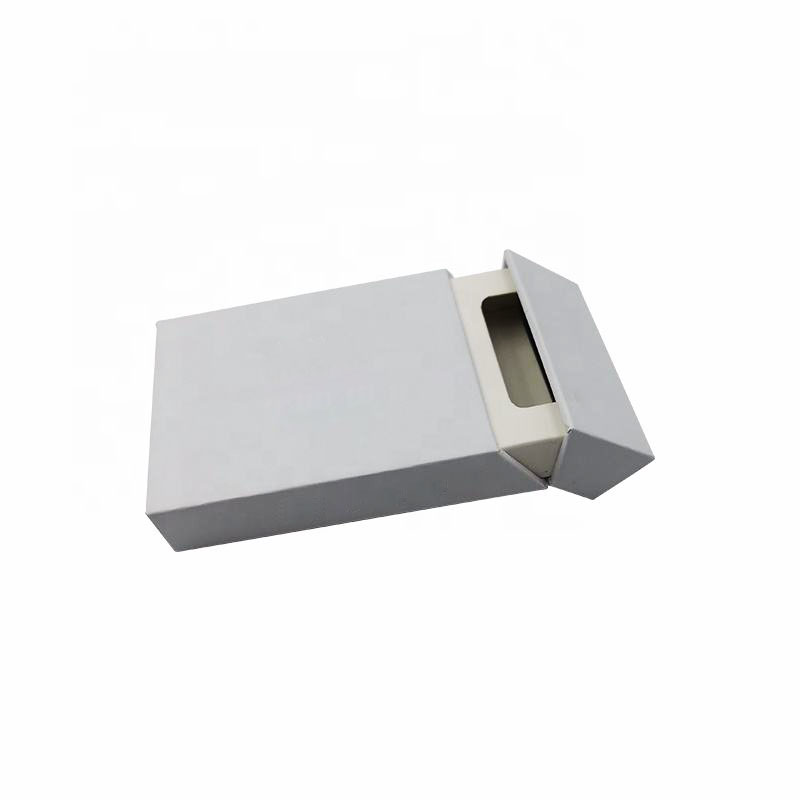
White sample first.
Pretty sample later.
It’s one of the cheapest forms of risk control in the whole project.
How do I compare cannabis packaging suppliers?
Cannabis packaging suppliers should be compared using structural-engineering capability, relevant child-resistant documentation, material specifications, print consistency, dimensional control, inspection procedures, sampling discipline, actual manufacturing capability, lead-time transparency and the supplier’s willingness to document exactly what will be produced rather than relying on vague claims about quality or compliance.
Price still matters.
Obviously.
But a quote that’s 8% cheaper stops looking clever when the insert fit is wrong, the closure report doesn’t match the structure or half the shipment arrives with rubbed corners.
Your Next Step: Build the Package From the Product Outward
Don’t start with “I want a premium cannabis box.”
Start with the SKU.
Send the supplier the cartridge, jar, pre-roll tube, edible container, concentrate component or CBD product you’re actually using. Include verified dimensions. Tell them the destination market. Explain where the CR function is supposed to live. Give them the quantity, pack-out requirement and artwork constraints.
Then ask for a structural recommendation.
Before decoration.
Before foil.
Before somebody falls in love with a render that can’t be manufactured.
For procurement teams, packaging engineers, cannabis brands and product developers, I think one question cuts through an enormous amount of sales fluff:
“Which packaging structure fits this product, jurisdiction, volume and distribution method—and what documentation supports the compliance claims you’re making?”
Good suppliers can answer that.
Weak ones usually start talking about lamination.
If you’re developing custom cannabis packaging, send your cartridge, jar, pre-roll, edible, concentrate or CBD package dimensions together with the target market and preferred structure. From there, evaluate the appropriate folding carton, child-resistant rigid box, drawer box, paper tube, insert system or printed retail package before committing to mass production.