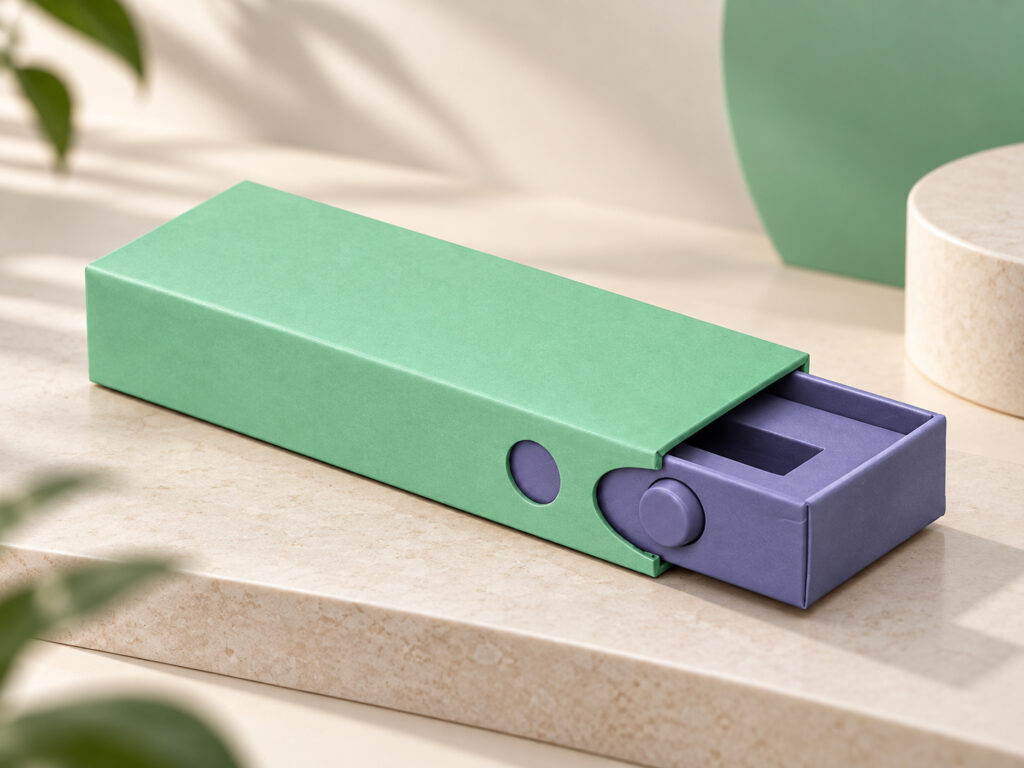
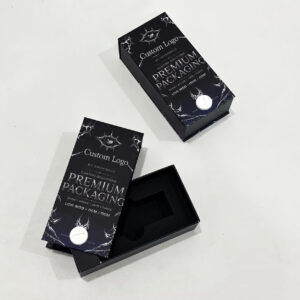
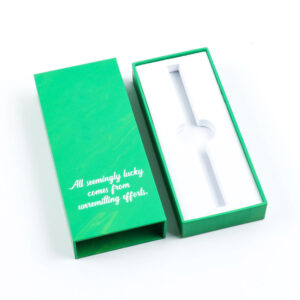
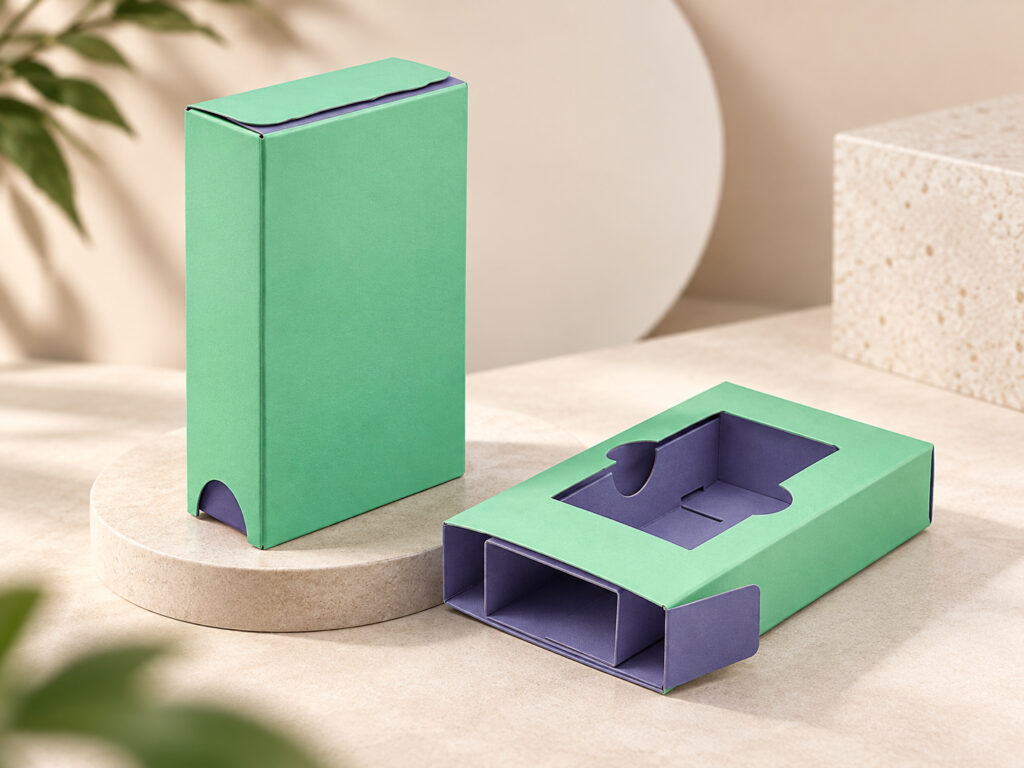
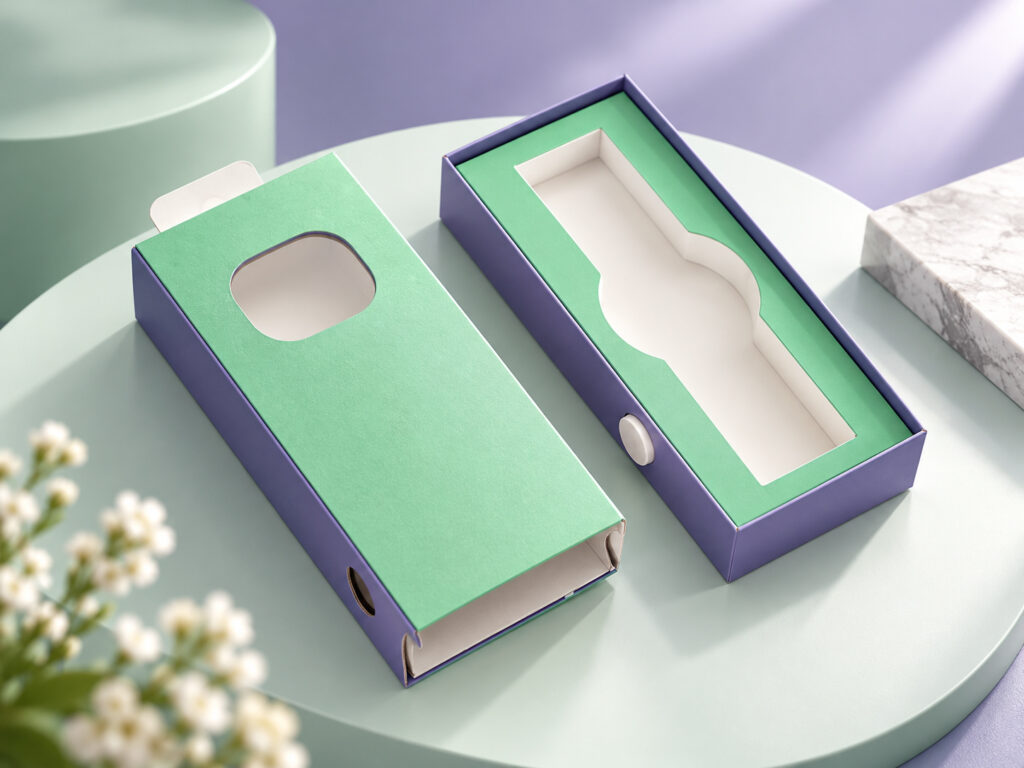
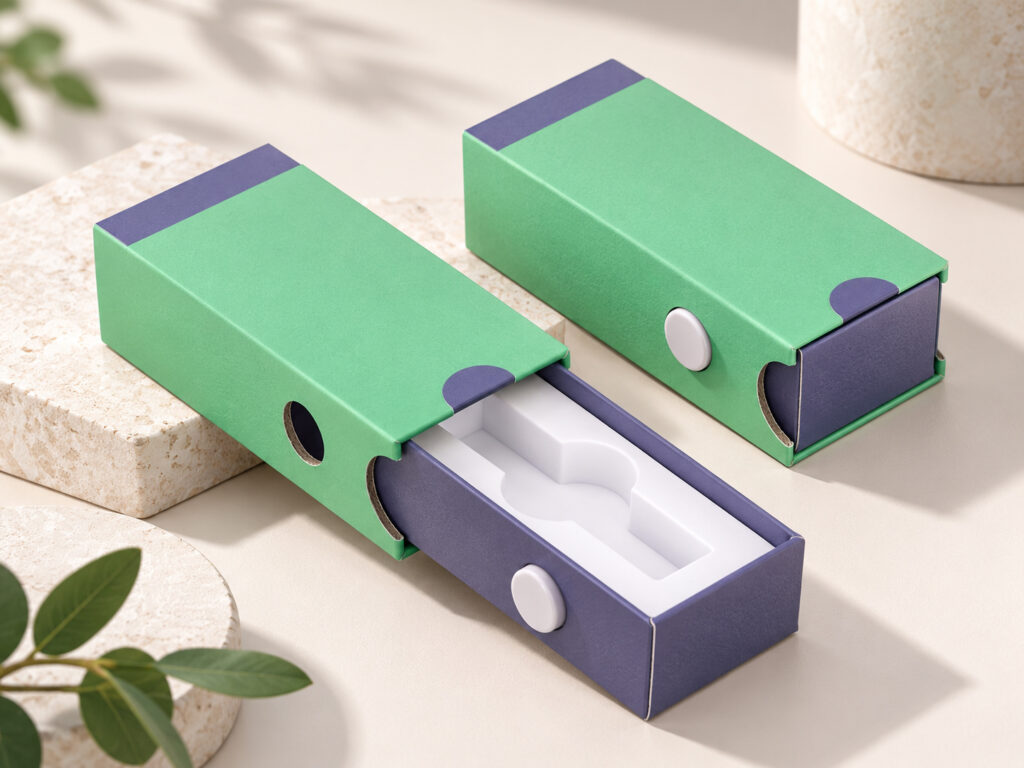
Custom child resistant boxes combine engineered opening mechanisms with printed paperboard structures for cannabis, CBD, vape cartridges, pre-rolls, concentrates, and other safety-sensitive products. Choose packaging dimensions, closure designs, inserts, and branded finishes around your product requirements. Develop packaging that balances restricted access, adult usability, and retail presentation, with testing documentation evaluated for the intended market.
Custom Child Resistant Boxes with Secure Opening Designs
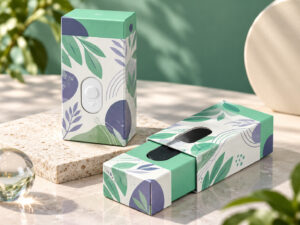
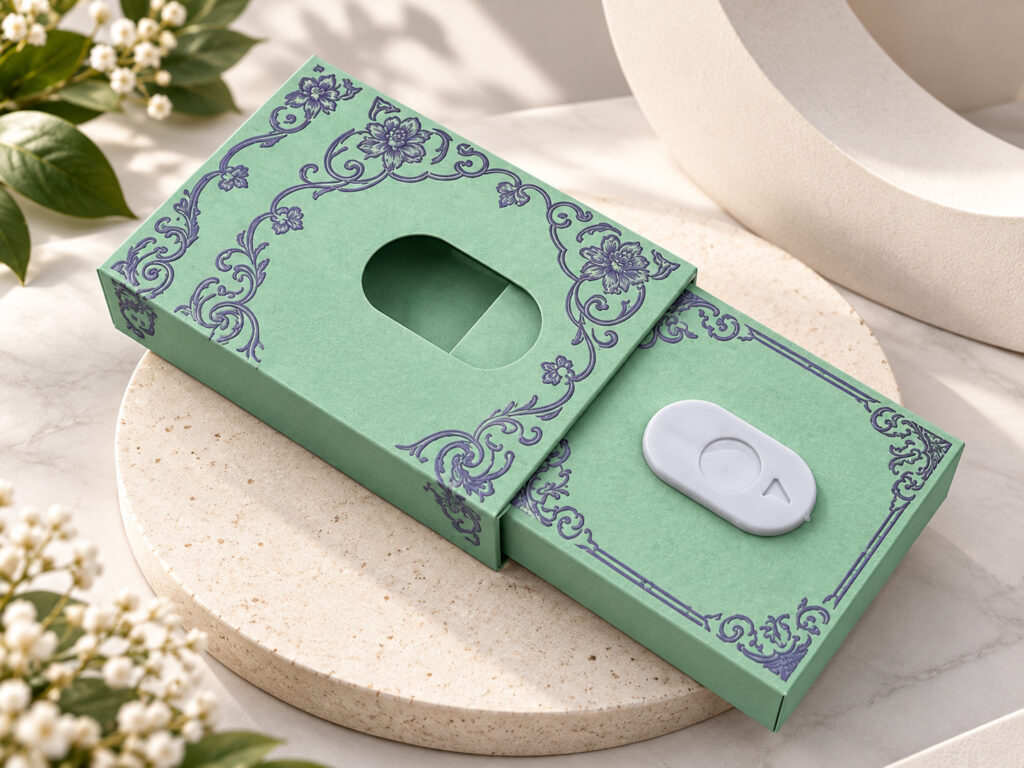
Child-resistant boxes use specialized closure mechanisms designed to make access significantly difficult for young children while remaining practical for adults. Unlike conventional rigid boxes, these structures incorporate functional locking features that require a particular opening action. Depending on the design, potential mechanisms include push-and-slide trays, push-button releases, and multi-step opening systems. The appropriate structure depends on product dimensions, closure performance, and whether child resistance must continue after repeated opening. A secure-looking closure alone does not establish child resistance. The complete configuration must be evaluated against the applicable performance requirements. For packaging engineers and purchasing teams, the goal is a repeatable structure that balances product protection, adult usability, and reliable manufacturing.
Explore Our Child Resistant Boxes
Explore available child-resistant packaging structures, opening mechanisms, and customization possibilities to identify suitable starting points for your product and purchasing requirements.
Explore practical resources covering structural packaging design, material selection, closure functionality, and child-resistance requirements to support informed packaging development and purchasing decisions.
Child-Resistant Box Styles for Different Product Applications
Different cannabis products require different internal dimensions, protective inserts, and opening arrangements. The packaging format should match both the product and its intended use.
Flexible Packaging
Vape Cartridge Boxes
Compact cartons or rigid structures with fitted inserts for cartridge protection and controlled opening.
Flexible Packaging
Pre-Roll Packaging Boxes
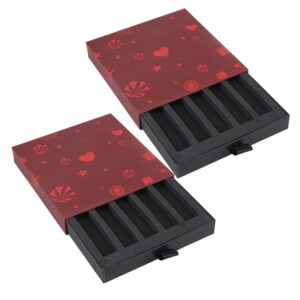
Slide-out and locking box concepts sized for individual pre-rolls or multipacks.
Flexible Packaging
Concentrate Packaging Boxes
Protective paperboard structures designed around concentrate jars and compatible primary containers.
Flexible Packaging
CBD and Edible Packaging
Custom-sized structures developed around product presentation and market-specific closure requirements.
Some products may require child resistance throughout repeated use; others may qualify for first-opening resistance. An outer carton should not automatically be treated as a substitute for required primary packaging.
Materials and Structural Specifications for Custom Boxes
Material selection affects structural strength, opening consistency, printing quality, and assembly efficiency. Rigid paperboard offers a sturdy presentation format, while folding cartons may be suitable where lighter construction is desirable. Kraft paperboard, compatible closure components, and protective inserts can also be considered during structural development. Every material must work with the intended locking mechanism. Board stiffness, cutting accuracy, fold behavior, and internal product fit can all influence performance.
Specification
Available Design Considerations
Box Structure
Rigid or folding construction
Material
Paperboard, kraft, or compatible alternatives
Dimensions
Customized to product measurements
Closure
Mechanism selected for intended use
Interior
Paperboard or protective inserts
Surface Finish
Printing and compatible decorative finishes
These are illustrative design options. Specific materials, closures, and production capabilities require confirmation. Final specifications should be established through structural sampling and product-fit evaluation.
Custom Printing, Branding, and Finishing Options
Custom printed child resistant boxes should communicate product identity without compromising closure performance. Brand artwork, logo placement, color matching, and regulatory information can be incorporated into the structural layout. Available finishing concepts may include matte or gloss coatings, foil stamping, embossing, debossing, and spot UV. The most effective customization begins with an approved structural dieline. Locking tabs, release points, folded edges, and opening instructions require sufficient clearance. For cannabis and CBD products, artwork must also accommodate applicable warnings, symbols, ingredient information, and other jurisdiction-specific labeling. Material recyclability should be assessed against the complete construction, including coatings, adhesives, and closure components.
Child-Resistant Testing and Compliance Requirements
Child-resistant design, successful testing, and documented regulatory compliance are separate considerations. In the United States, the Poison Prevention Packaging Act (PPPA) establishes special-packaging requirements for certain regulated substances. Under 16 CFR Part 1700, § 1700.20 describes testing procedures that assess child resistance and adult usability. It is not a blanket certification for every box design. The U.S. Consumer Product Safety Commission also makes clear that it does not approve or endorse individual packaging designs.
Cannabis-specific requirements vary by jurisdiction. For example, California distinguishes packaging that must remain child-resistant throughout use from qualifying packaging that may lose child resistance after initial opening.
Before ordering, buyers should verify the applicable requirements and request documentation addressing: – The tested packaging configuration and closure mechanism. – Relevant child-resistance and adult-use test reports. – Materials, dimensions, and assembly specifications. – Opening and reclosing instructions, when applicable. – Documentation relevant to the destination market. Changing critical structural features may require reassessment. Child-resistant does not mean childproof. Tamper evidence is also a separate functional requirement.
Questions Buyers Ask Before Ordering Child-Resistant Boxes
What makes a packaging box child-resistant? A child-resistant box incorporates an opening mechanism designed to restrict access by young children while remaining usable by adults. Its performance must be demonstrated through appropriate testing rather than assumed from its appearance.
Can child-resistant boxes be customized with a logo? Yes, suitable designs can accommodate custom logos, printed artwork, and decorative finishes. The artwork and finishing processes should preserve closure performance and leave adequate space for required regulatory labeling.
Which child-resistant box styles work for vape cartridges? Potential options include locking drawer structures and purpose-designed folding or rigid boxes. Selection depends on cartridge dimensions, insert requirements, first-opening resistance, and the rules of the intended sales market.
Are child-resistant boxes required for cannabis products? Requirements depend on the jurisdiction and product type. California, for example, requires child-resistant packaging for cannabis goods and establishes different conditions for certain product categories.
Can child-resistant boxes be made from recyclable paperboard? Paperboard may be recyclable, but the finished package’s recyclability depends on coatings, adhesives, inserts, closure components, and local recycling infrastructure. Material claims should be verified for the actual construction. What testing documents should buyers request? Request relevant child-resistance test reports, identification of the tested configuration, material specifications, closure details, and applicable conformity documentation. Confirm that the evidence covers the packaging design being purchased.
Are child-resistant boxes suitable for CBD packaging? They can be considered for CBD products, including tinctures, capsules, and other formats. The required protection depends on the formulation, applicable regulations, primary container, and intended distribution market.
Can I request a structural sample before production? Structural samples should be discussed before mass production. They allow teams to evaluate product fit, closure action, artwork placement, and assembly quality before approving the final production configuration.
What information is needed for a wholesale quotation? Provide product dimensions, box style, preferred materials, printing requirements, estimated quantity, delivery destination, and relevant regulatory requirements. Reference photographs or existing dielines can help clarify the intended construction.
Does a child-resistant outer box replace child-resistant primary packaging? Not automatically. Packaging requirements may apply to the complete packaging system or particular protective layers. The proposed outer box and primary container must be assessed against the applicable jurisdiction and product requirements.
How to Evaluate a Child-Resistant Packaging Manufacturer
Selecting a supplier requires more than comparing printing prices. Buyers should assess structural development experience, closure repeatability, material consistency, quality-control procedures, and the availability of relevant test documentation. Ask whether the manufacturer can reproduce the approved sample at the requested production quantity and maintain critical dimensions across batches. For international sourcing, confirm responsibilities for packaging testing, artwork approval, inspection, and documentation before placing an order. A capable supplier should explain the proposed construction clearly, identify limitations, and provide enough technical information for informed purchasing decisions.