Turn Your Packaging Concept Into a Production-Ready Solution


| Packaging format | Typical applications |
| Stand-up pouches | Snacks, powders, and retail products requiring upright presentation |
| Flat pouches and sachets | Single-use portions, samples, and compact products |
| Three-side-seal bags | Small products and controlled-portion packaging |
| Gusseted bags | Bulkier contents needing additional capacity |
| Spouted pouches | Liquids and controlled dispensing |
| Rollstock films | Automated form-fill-seal packaging lines |
| Custom printed bags | Branded retail and consumer packaging |


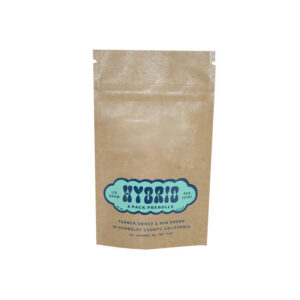
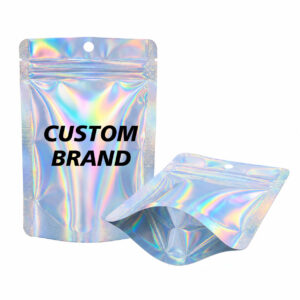
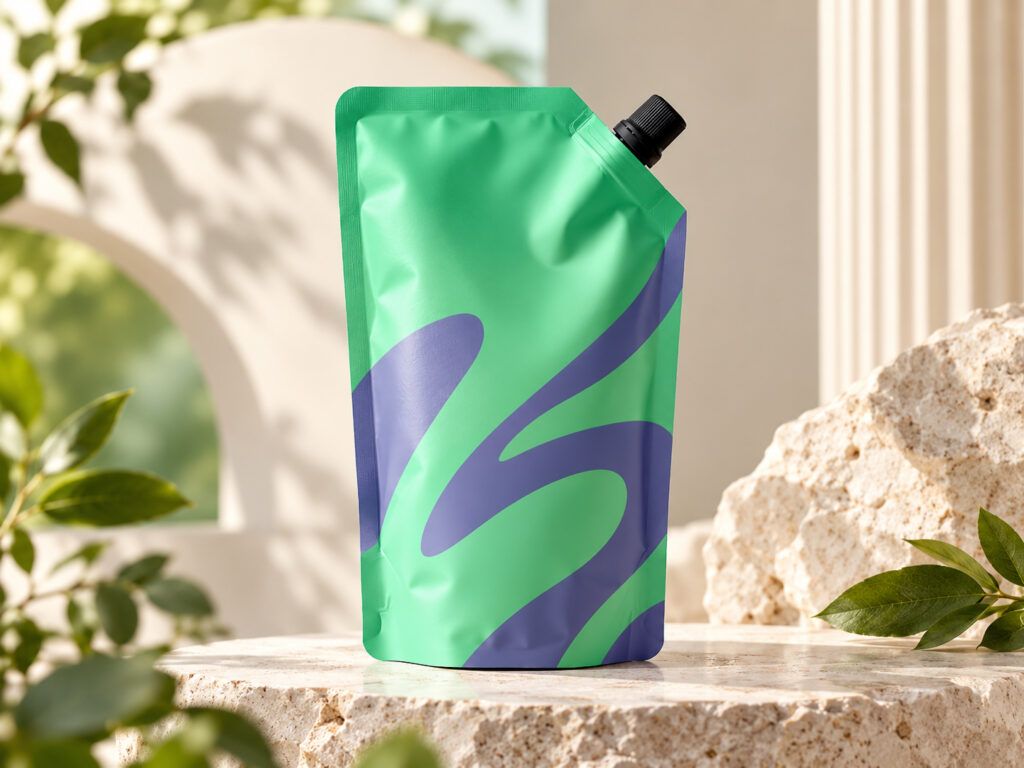
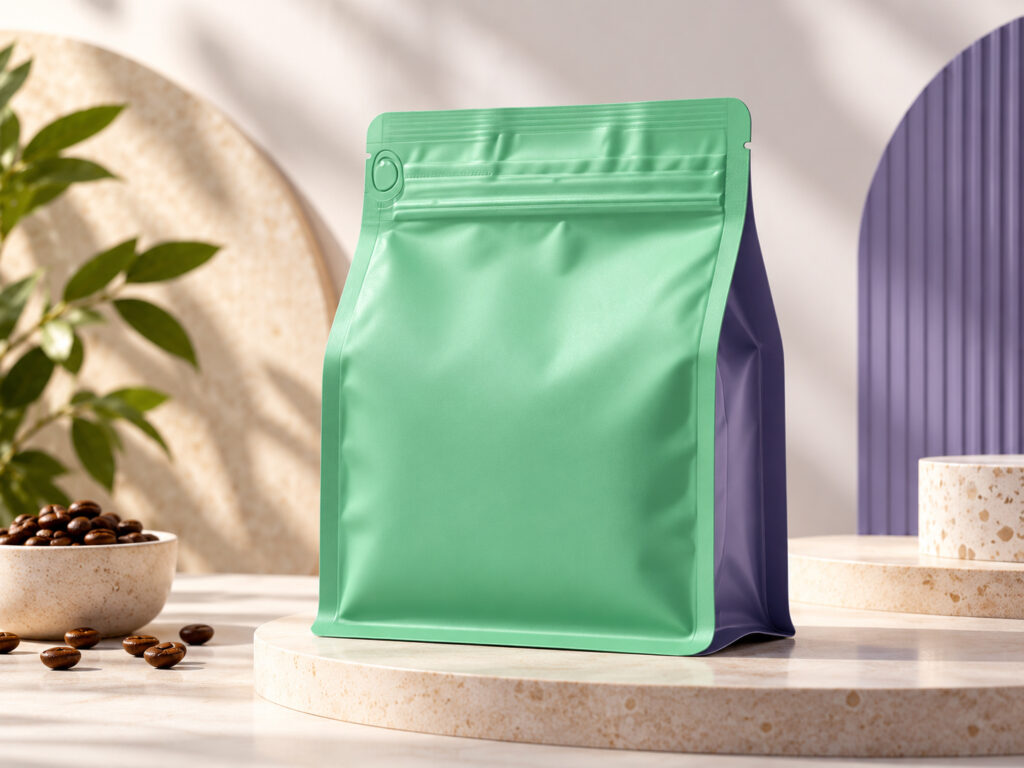
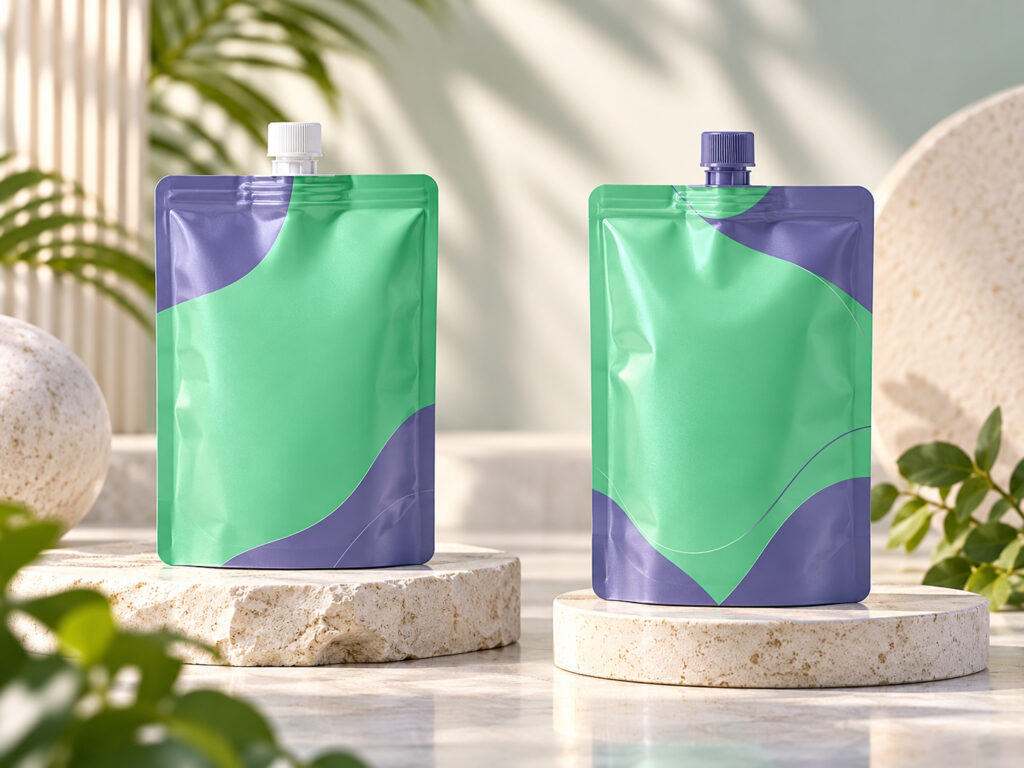
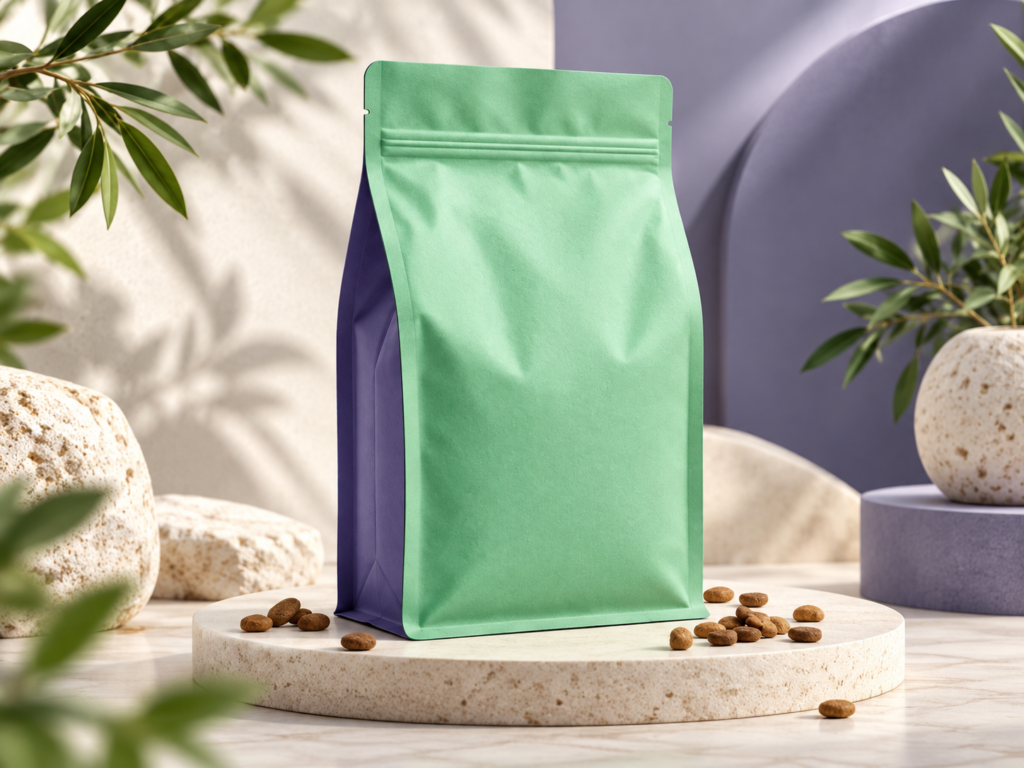
Custom printed flexible packaging combines functional product protection with recognizable branding. Package dimensions, artwork placement, print coverage, surface finish, and closure design all influence how the finished product looks and performs.
Key customization considerations include:
– Size and shape: Adjust dimensions to fit product volume and retail presentation.
– Artwork and color: Define brand graphics, print areas, and color-matching requirements.
– Surface finish: Consider matte or gloss effects according to material and printing compatibility.
– Product visibility: Evaluate transparent windows when protection requirements permit.
– Opening features: Specify tear notches, resealable zippers, or dispensing features where technically suitable.
The chosen substrate influences print reproduction and surface appearance. Film movement, seal areas, and pouch construction must also be accounted for during artwork preparation.
Before production, confirm artwork files, printing methods, material compatibility, and physical samples where necessary.
A well-defined specification makes it easier to maintain consistent branding across different flexible packaging products.


Accurate specifications help manufacturers evaluate feasibility, select appropriate materials, and provide meaningful quotations. For custom flexible packaging, dimensions alone rarely provide enough information.
| Specification | What Buyers Should Define |
| Packaging format | Pouch, bag, sachet, or film |
| Dimensions | Width, height, gusset, and required tolerances |
| Material structure | Substrate, layers, and barrier requirements |
| Film thickness | Application-specific thickness or gauge |
| Closure and sealing | Heat seal, zipper, spout, or other features |
| Printing | Artwork, coverage, colors, and finish |
| Filling compatibility | Product properties and filling equipment |
| Performance testing | Seal strength, barrier, puncture, and handling requirements |
For rollstock used with vertical form-fill-seal (VFFS) machines, film width, sealing behavior, winding orientation, and machine compatibility deserve particular attention.
Production approval should address dimensional accuracy, print positioning, seal integrity, and relevant handling performance.
Where material extrusion methods or blown films are involved, the resulting film properties should be evaluated against the intended application rather than assuming that a particular manufacturing process guarantees performance.
Before ordering: Provide a specification sheet and request confirmation of the testing and acceptance criteria appropriate for your package.


| Buying factor | Flexible packaging | Rigid packaging |
| Structure | Adaptable films and bags | Fixed-shape boxes or containers |
| Storage | Often compact before filling | Generally maintains its shape |
| Product protection | Depends on film and seals | Depends on walls and construction |
| Presentation | Printed surfaces and varied shapes | Defined geometry and structural support |
| Cost drivers | Films, printing, filling, converting | Materials, forming, assembly, shipping |
| End-of-life | Depends on film composition and collection | Depends on materials and local recovery systems |
Sustainable packaging decisions require more than selecting the thinnest film or replacing plastic with paper. Product protection, material composition, manufacturing requirements, and waste-management infrastructure all affect environmental outcomes.
Mono-material polyethylene or polypropylene structures may offer recycling-design advantages when their performance is appropriate. However, specialized multi-material laminates can still be necessary for demanding barrier applications.
Important sourcing considerations include material reduction, verified recycled content, barrier coatings, and whether local systems can actually collect and process the finished package.
The CEFLEX Designing for a Circular Economy guidelines recommend considering the entire structure, including adhesives, inks, closures, and barrier layers.