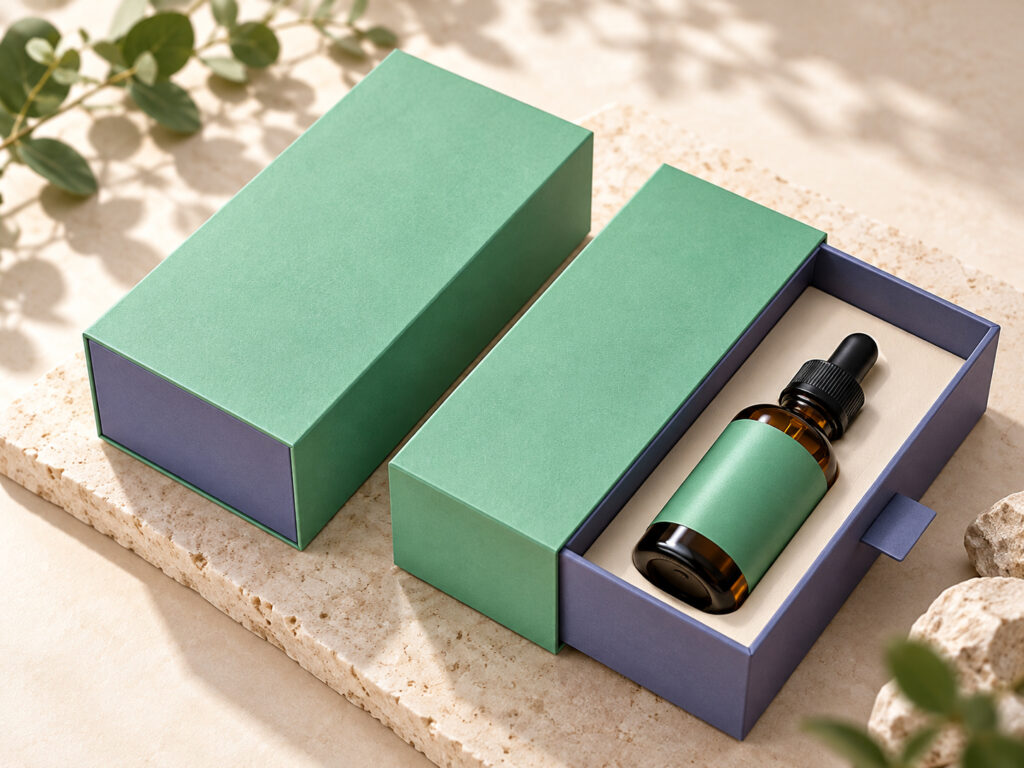
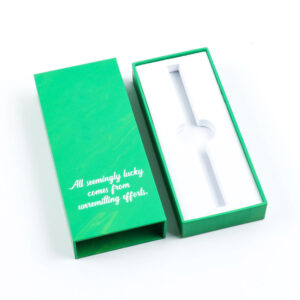
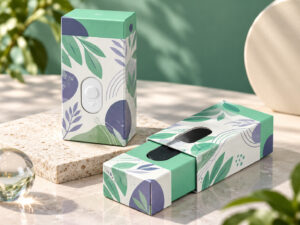
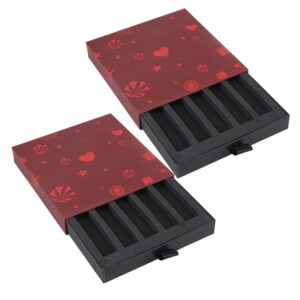
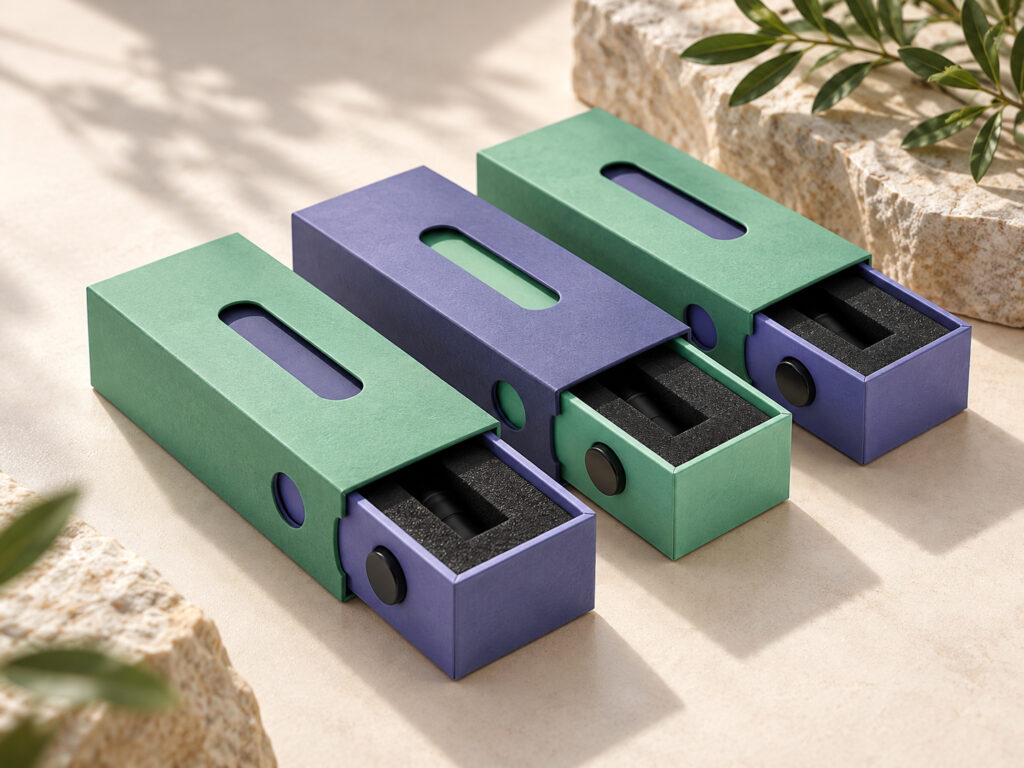
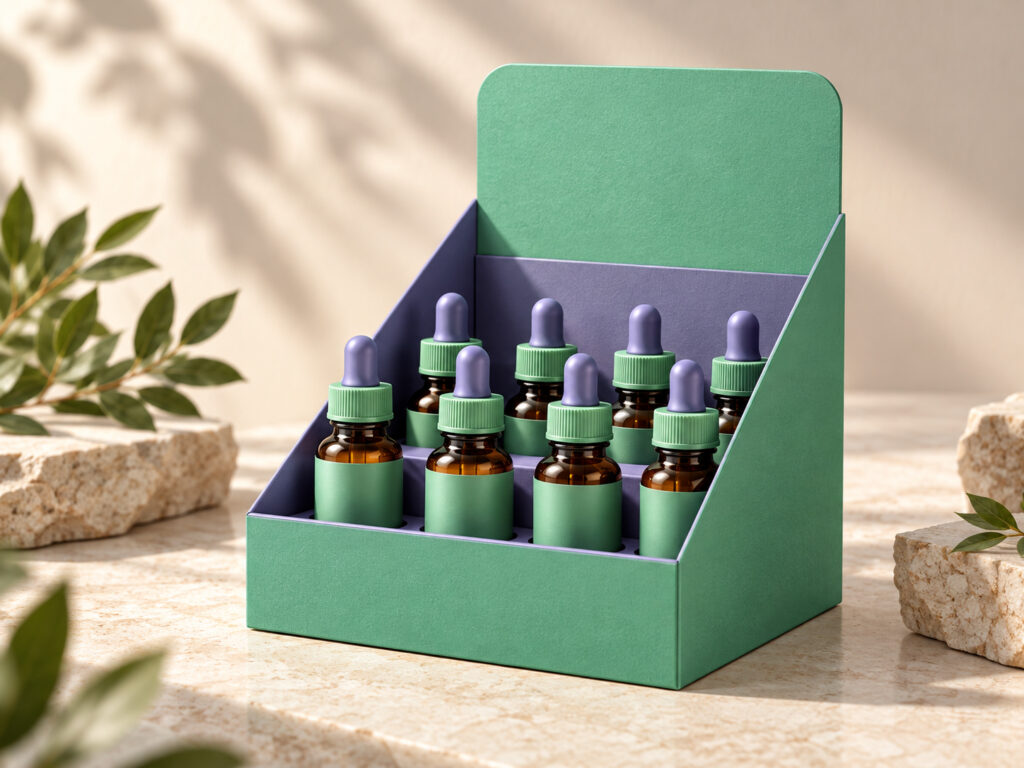
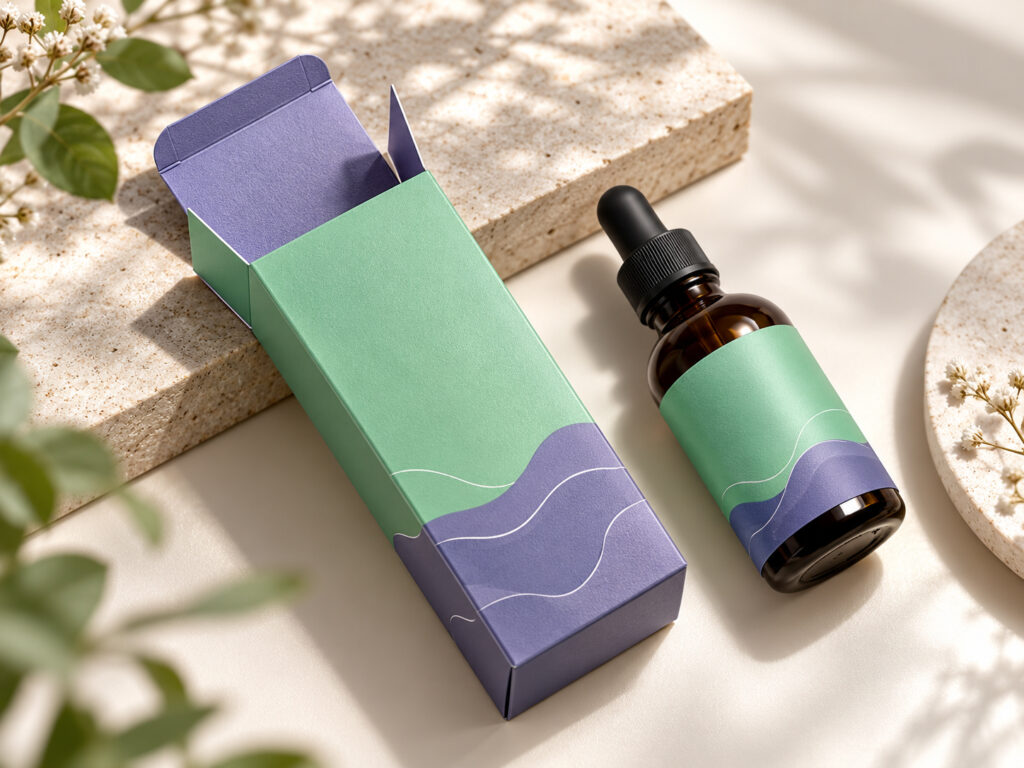
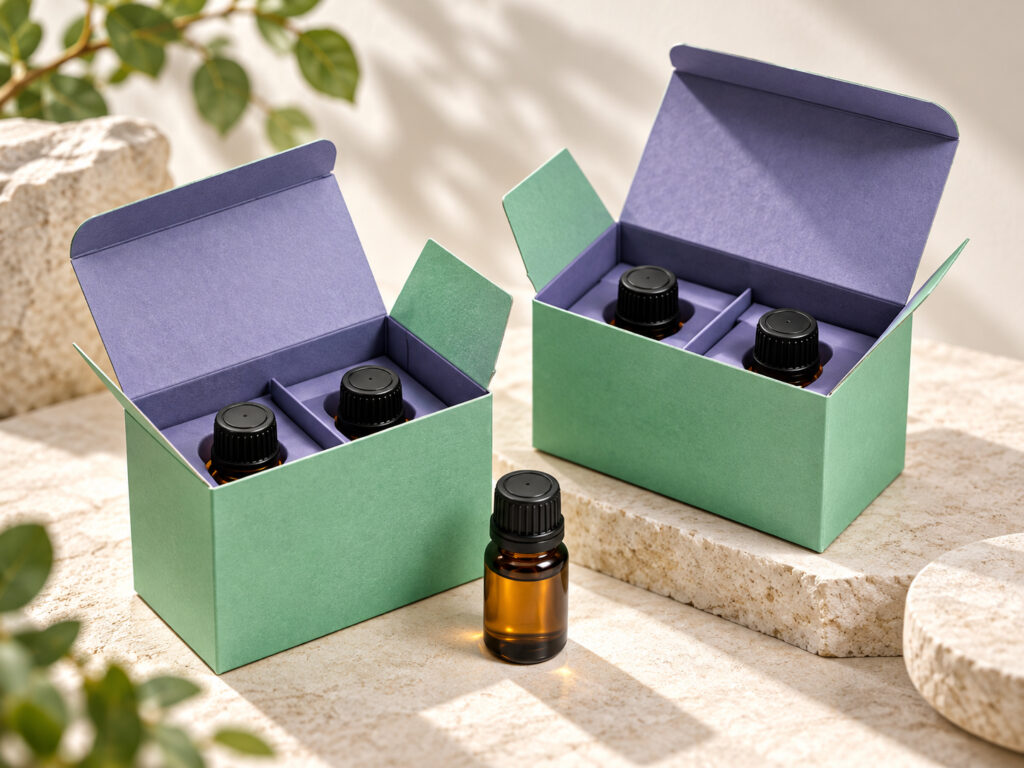
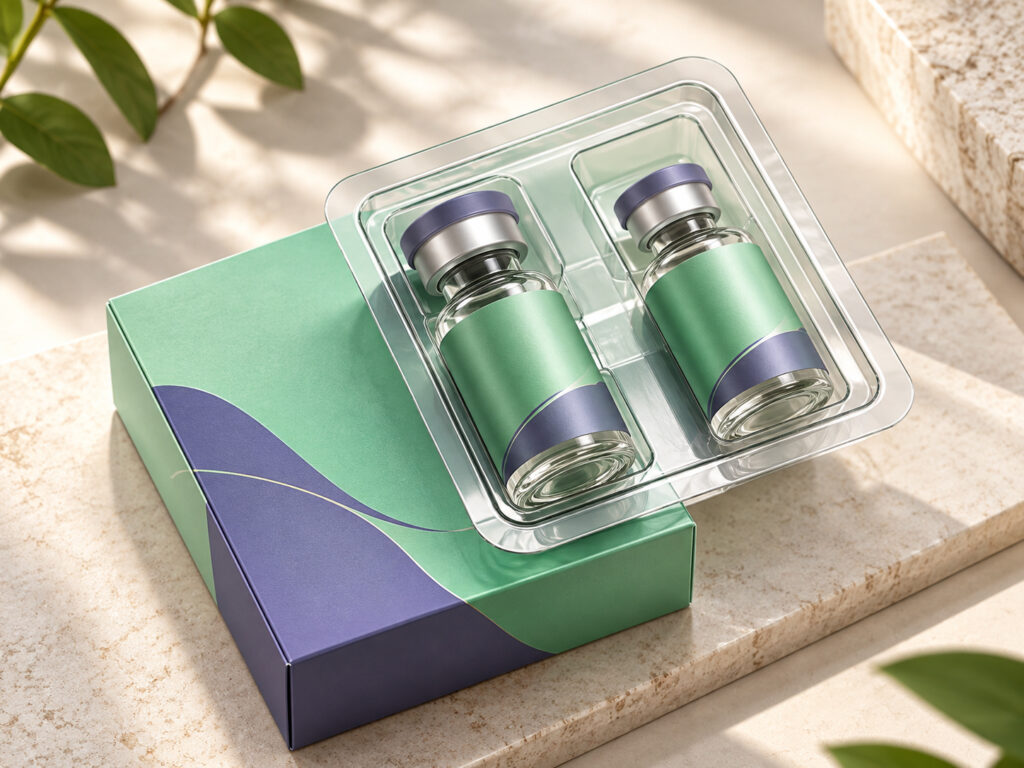
CBD Packaging Boxes can be developed around CBD oils, tincture bottles, gummies, hemp-derived products, gift sets, and other retail formats. The right CBD box balances container fit, structural protection, shelf presentation, branding, packing efficiency, and destination-market requirements. Buyers should compare box structure, material, inserts, artwork, quantity, and product dimensions before requesting production pricing.
CBD Packaging Boxes for Different Product Formats
Packaging for CBD should start with the actual product, not a generic box size. A small tincture bottle, a pouch of gummies, and a multiproduct gift set create very different requirements for fit, protection, presentation, and retail handling. CBD oil packaging and CBD tincture boxes often need to accommodate the bottle body, cap or dropper, labeling area, and internal movement. CBD gummies boxes may prioritize efficient carton dimensions, graphics, and shelf presentation. Gift sets or subscription products can require space for several components within one coordinated package. The CBD box structure should therefore reflect the CBD product, its primary container, sales channel, shipping conditions, and desired customer experience. This also helps buyers avoid paying for packaging features that add little value to the intended application.
CBD Packaging Boxes
CBD Packaging Boxes
Explore available CBD packaging box products and structures to compare formats suitable for different CBD products, retail presentations, and packaging requirements.
Different packaging structures solve different commercial problems. Folding cartons are generally space-efficient and well suited to many retail product boxes. Rigid boxes can provide a more substantial presentation for gift-oriented or premium positioning, while sleeve boxes create a layered opening experience. Mailer boxes may be considered when ecommerce presentation and distribution are important. Display boxes can support products intended for countertop or shelf merchandising, while CBD gift boxes can organize products into a more presentation-focused format. When comparing custom CBD boxes, consider product weight, packing speed, storage space, insert requirements, retail display, and unboxing expectations. A packaging box that works well for a lightweight bottle may not be appropriate for a larger multiproduct kit. There is no universally best structure—the specification needs to match the application.
Packaging Materials and Product Protection
Material selection influences stiffness, surface appearance, product protection, storage efficiency, and overall box construction. Common categories buyers may evaluate include paperboard, kraft-based options, corrugated materials, and rigid board. The material alone does not determine whether packaging will protect CBD products effectively. Board thickness, box geometry, internal clearance, inserts, closure design, product weight, and handling conditions also affect performance. For sustainability-focused projects, terms such as eco-friendly packaging or sustainable packaging should be supported by documented material information rather than treated as automatic claims. Buyers can ask suppliers to identify material composition, sourcing documentation, and disposal or recovery information relevant to the destination market. Before approving materials for CBD box packaging, consider how the package will move through packing, warehousing, transportation, retail handling, and final use.
CBD Packaging Boxes
CBD Packaging Boxes
Custom Printing, Branding, and Packaging Design
Custom CBD packaging also functions as a visible brand asset. Artwork, logo placement, color, graphics, typography, structural proportions, and surface finish choices can all influence how a product appears on a shelf or in an ecommerce unboxing experience. For custom printed CBD boxes, buyers should prepare accurate artwork and define where important information, branding, and regulatory content need to appear. Boxes with logo graphics should also be reviewed against the dieline so folds, seams, openings, or structural edges do not interfere with essential design elements. Packaging designs should connect brand identity with the physical structure rather than treating graphics and construction as separate decisions. When requesting customized packaging, clearly specify the desired appearance, print coverage, finish requirements, and any areas that must remain available for labeling.
Retail, Wholesale, Gift, and Subscription Applications
The same CBD product may require different packaging solutions depending on how it will be sold. Retail packaging usually places greater emphasis on shelf presentation, information hierarchy, scanning, and efficient stocking. Wholesale packaging projects may place additional focus on repeatability, packing efficiency, quantity, and unit-cost planning. CBD gift boxes and luxury gift boxes may use more presentation-oriented structures, especially for product launches or multiproduct sets. CBD subscription boxes can require enough flexibility to organize different product combinations while maintaining a consistent branded experience. For CBD boxes wholesale inquiries, pricing normally depends on the complete specification rather than the keyword “wholesale prices.” Structure, material, dimensions, printing, finishing requirements, inserts, quantity, and destination can all affect a quotation.
CBD Packaging Boxes
CBD Packaging Boxes
Compliance-Aware CBD Packaging Considerations
CBD packaging requirements can vary by product type, formulation, intended market, jurisdiction, retail channel, and labeling rules. Packaging should therefore be reviewed against the requirements that apply to the specific product and destination—not against a generic CBD packaging checklist. In the United States, the FDA states that the 2018 Farm Bill did not remove FDA authority over products containing cannabis or cannabis-derived compounds; applicable FDA-regulated products remain subject to relevant federal requirements. Child-resistant packaging should also not be assumed to be mandatory for every CBD product. The U.S. Consumer Product Safety Commission explains that the Poison Prevention Packaging Act applies child-resistant requirements to specified household substances. Whether a CBD product requires a particular package therefore needs to be determined from the actual product and applicable regulations. Before production, confirm current labeling, packaging, warning, closure, and market-specific requirements with qualified regulatory resources for your intended destination.
How to Evaluate a CBD Packaging Supplier Before Ordering
A useful supplier comparison goes beyond asking whether a company can produce a custom box. Buyers should confirm whether the proposed supplier can meet the actual structure, dimensions, materials, printing, insert configuration, quality expectations, and commercial requirements of the project.
Prepare a clear specification before requesting quotations. Useful inputs include:
Finished box dimensions or product/container dimensions
Preferred box structure
Material preference or performance objective
Printing artwork and branding requirements
Required finish characteristics
Insert requirements
Order quantity
Product use case
Destination market
Sample or prototype expectations, if required
Also confirm practical purchasing details such as MOQ, production lead time, sampling arrangements, quality-control expectations, packaging method, and shipping responsibilities directly with the supplier rather than assuming they are standard across packaging companies.
A detailed RFQ makes different CBD packaging solutions easier to compare because each supplier is responding to the same packaging needs and specifications.
Inserts, Fit, and CBD Oil Bottle Packaging
CBD oil bottles and tincture containers require careful dimensional planning. Bottle diameter, height, shoulder shape, cap or dropper clearance, and the internal dimensions of the CBD box all affect fit. If the product moves excessively inside the package, the presentation may feel poorly controlled and the container can experience more contact during handling. Custom inserts can be considered when a bottle, accessory, or multiple components need defined positions inside the packaging. For CBD oil packaging, hemp oil boxes, and custom CBD tincture boxes, provide the actual container dimensions whenever possible. Do not rely only on the stated fill volume because bottles with similar capacities can have different external dimensions. For kits, identify every component and its orientation before the box is designed. This makes it easier to plan structural fit and internal presentation without guessing.